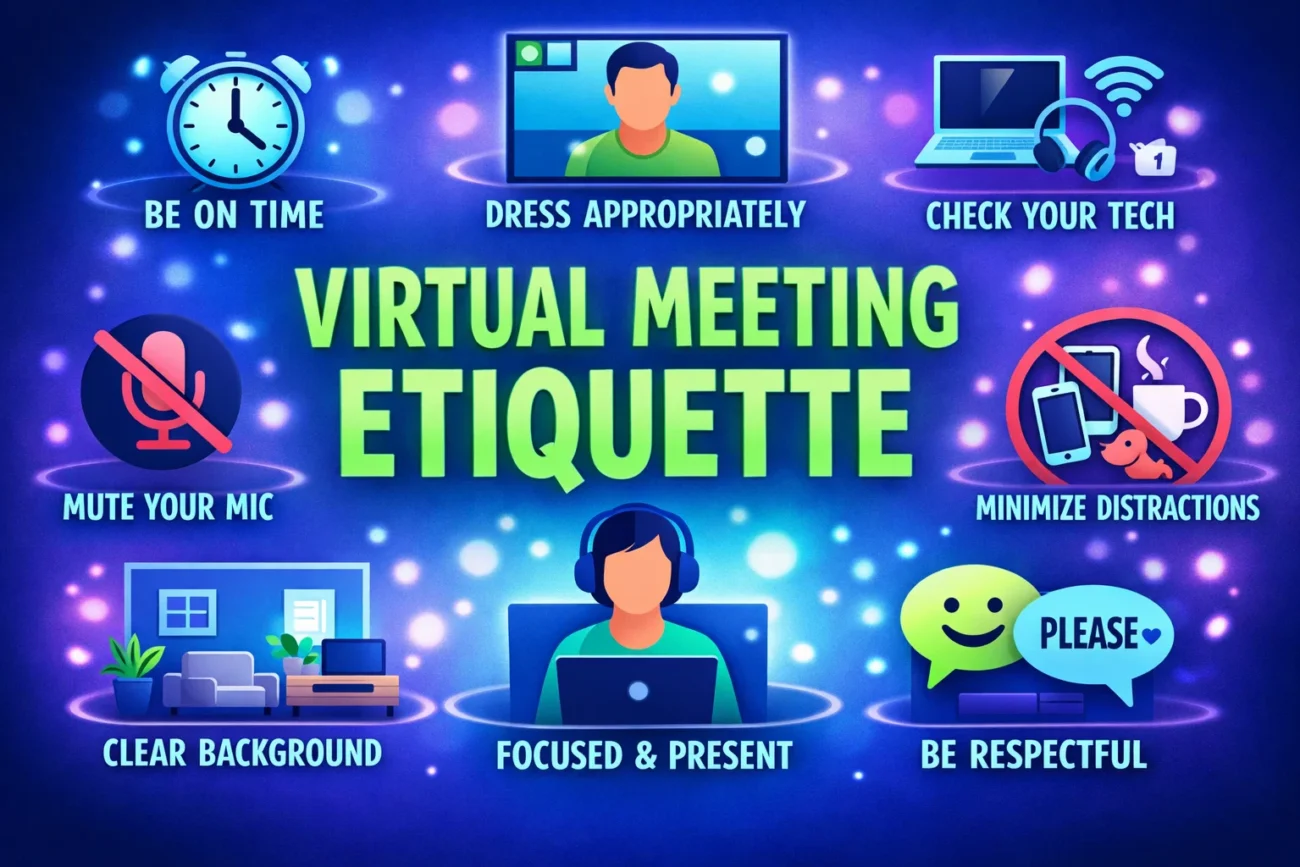
In today’s fast-paced digital world, mastering Virtual Meeting Etiquette has become more than just a professional courtesy—it’s a critical component of effective communication. With the rise of remote work and global teams, virtual meetings have replaced traditional face-to-face interactions, making the ability to conduct oneself properly in these digital settings essential. Poor meeting etiquette can lead to miscommunication, wasted time, and even damage to one’s professional reputation.
Understanding the Importance of Virtual Meeting Etiquette
Virtual Meeting Etiquette is about maintaining professionalism, clarity, and respect in an online meeting environment. Unlike in-person meetings, virtual gatherings require additional awareness of technological limitations, time zones, and digital distractions.
The lack of physical presence can easily lead to disengagement or misunderstandings, making etiquette crucial for maintaining attention and ensuring that all participants feel valued. Practicing good etiquette demonstrates respect for colleagues’ time and effort and contributes to a more inclusive and effective digital workspace.
Preparing for Virtual Meetings
One of the most fundamental aspects of Virtual Meeting Etiquette is preparation. Participants should ensure they understand the meeting’s purpose, agenda, and expected outcomes beforehand. Preparing notes, questions, and necessary documents helps participants stay engaged and contributes to a productive conversation.
Verifying that your technology—such as internet connection, microphone, camera, and any required software—is functioning properly before the meeting begins prevents disruptions and conveys professionalism. Preparing mentally and technically ensures that the virtual meeting is seamless and efficient.
Choosing the Right Environment
A key component of Virtual Meeting Etiquette involves selecting an appropriate environment for participation. Background noise, clutter, or interruptions can distract other participants and reduce the meeting’s effectiveness. Ideally, participants should join from a quiet, well-lit space that allows their face to be clearly visible on camera. Ensuring privacy is important, especially when sensitive topics are discussed. When a professional environment is not available, using virtual backgrounds or headphones can help maintain focus and minimize distractions.
Punctuality and Attendance
Being on time is a fundamental principle of Virtual Meeting Etiquette. Just as in traditional meetings, arriving late to a virtual meeting can disrupt the flow and waste others’ time. Participants should log in a few minutes early to allow for any technical issues that may arise. Consistent punctuality reflects respect for colleagues and demonstrates reliability.
Professional Appearance and Body Language
Even though participants may be attending from home, maintaining a professional appearance is part of good Virtual Meeting Etiquette. Dressing appropriately and ensuring that your camera is at eye level conveys seriousness and engagement. Body language, though less noticeable than in-person interactions, still plays a role in virtual settings. Nodding, maintaining eye contact with the camera, and avoiding multitasking signal attentiveness and respect for the speaker. A professional demeanor contributes to a positive and productive meeting atmosphere.
Effective Communication
Clear and respectful communication is at the heart of Virtual Meeting Etiquette. Participants should speak concisely, avoid interrupting others, and use appropriate language. Since non-verbal cues can be limited, verbalizing thoughts clearly is essential.
Tools like hand-raising features or chat boxes can help manage discussions and ensure everyone has the opportunity to contribute. Active listening, summarizing key points, and asking clarifying questions are all practices that enhance communication and prevent misunderstandings in virtual meetings.
Managing Technology Effectively
Proper use of technology is critical to maintaining Virtual Meeting Etiquette. Familiarity with the platform being used—whether Zoom, Microsoft Teams, Google Meet, or another tool—is essential. Participants should know how to mute/unmute themselves, share screens, and use chat or reaction features effectively.
Technical mishaps are inevitable, but knowing how to navigate them smoothly minimizes disruption. Hosts, in particular, should be prepared with backup plans and guides to assist participants in case of technical difficulties.
Respecting Time and Agenda
Adhering to the meeting agenda and respecting allocated time slots is a key aspect of Virtual Meeting Etiquette. Meetings that run over schedule can cause frustration and reduce productivity. Participants should stay on topic, avoid unnecessary tangents, and limit lengthy monologues.
Hosts can facilitate this by setting clear time limits for each agenda item and gently guiding discussions to ensure efficient use of time. Respecting the schedule demonstrates consideration for everyone’s commitments and enhances overall meeting efficiency.
Minimizing Distractions
One of the challenges of virtual meetings is the abundance of potential distractions. Maintaining focus is an essential part of Virtual Meeting Etiquette. Participants should silence notifications, close unrelated applications, and avoid multitasking. Engaging fully in the discussion signals respect for others’ contributions and fosters a collaborative environment. Even small gestures, such as looking at the camera instead of the screen, can make a significant difference in demonstrating attentiveness.
Handling Interruptions and Technical Issues Gracefully
Interruptions and technical issues are common in virtual meetings, but handling them gracefully is an important element of Virtual Meeting Etiquette. If unexpected noises, connectivity problems, or personal distractions occur, acknowledging them briefly and correcting the situation without disrupting others is key. Patience and understanding toward colleagues facing similar challenges also reflect professionalism. Maintaining composure during such events reinforces a positive, collaborative environment.
Engaging and Inclusive Participation
Effective Virtual Meeting Etiquette emphasizes inclusivity and engagement. Hosts should actively encourage participation from all attendees, especially those who may be quieter or less confident. Using features such as polls, breakout rooms, or round-robin speaking opportunities helps create a balanced discussion.
Participants, in turn, should contribute constructively, respect differing opinions, and avoid dominating the conversation. An inclusive approach ensures that diverse perspectives are heard and valued, enriching the overall meeting experience.
Follow-Up and Accountability
A crucial yet often overlooked aspect of Virtual Meeting Etiquette is follow-up. Meetings are only effective if decisions, actions, and responsibilities are clearly communicated afterward. Sending concise summaries, action items, and deadlines ensures accountability and keeps the team aligned. Participants should review these follow-ups promptly and execute assigned tasks efficiently. Consistent follow-up demonstrates reliability, reinforces the purpose of the meeting, and sustains momentum in collaborative projects.
Cultural Sensitivity in Virtual Meetings
With the global nature of virtual meetings, cultural sensitivity plays an important role in Virtual Meeting Etiquette. Participants should be mindful of time zones, holidays, and cultural norms when scheduling and conducting meetings.
Communication styles, humor, and gestures can vary widely across cultures, so being respectful and adaptable enhances mutual understanding. Awareness of cultural differences helps prevent miscommunication and fosters a more harmonious, professional environment.
Security and Privacy Considerations
Maintaining security and privacy is a critical, though sometimes overlooked, element of Virtual Meeting Etiquette. Sharing sensitive information over unsecured channels or allowing uninvited participants can compromise confidentiality. Participants should follow organizational guidelines, use passwords or waiting rooms, and ensure screens are shared responsibly. Protecting data and respecting privacy contribute to a safe and trustworthy virtual workspace.
Adapting to New Technologies and Trends
Virtual meetings are constantly evolving with new tools and technologies. Staying updated on features, best practices, and emerging trends is part of modern Virtual Meeting Etiquette. From AI-driven transcription services to interactive whiteboards and collaborative platforms, embracing innovation can enhance engagement and productivity. Adapting to these changes demonstrates flexibility, curiosity, and a commitment to improving team interactions.
The Role of the Host in Virtual Meeting Etiquette
The host of a virtual meeting carries significant responsibility in setting the tone for proper Virtual Meeting Etiquette. A skilled host ensures that the meeting starts and ends on time, the agenda is clear, and all participants are engaged. They must manage the flow of discussion, handle technical difficulties, and enforce etiquette rules without appearing authoritarian.
Setting expectations at the beginning, such as muting microphones when not speaking or using chat functions for questions, helps maintain order. The host’s approach influences the overall productivity and professionalism of the meeting.
Encouraging Participation Without Overcrowding
A key aspect of Virtual Meeting Etiquette is balancing participation. While it is essential to encourage engagement, too many people speaking at once can create confusion and frustration. Techniques like using “raise hand” features, moderated Q&A sessions, and breakout rooms allow for equitable participation.
Hosts should actively monitor chat messages and provide opportunities for quieter members to contribute. This approach not only maintains order but also ensures all voices are heard, fostering a culture of respect and collaboration.
Adapting Your Communication Style
Adapting communication style is another critical component of Virtual Meeting Etiquette. Written and verbal cues may need to be more explicit in virtual settings than in-person meetings because participants cannot rely on body language or subtle facial expressions.
Speaking clearly, avoiding jargon, and checking for understanding can prevent miscommunication. It is also helpful to summarize key points periodically to ensure alignment. Adapting your style shows awareness of the unique challenges posed by remote communication and demonstrates professionalism.
Managing Multitasking and Attention
Multitasking during virtual meetings is one of the biggest threats to effective Virtual Meeting Etiquette. Checking emails, browsing social media, or attending to unrelated tasks can appear disrespectful to other participants and decrease your own retention of meeting content.
Professionals should focus fully on the meeting, take notes, and actively engage in discussions. Using features like “focus mode” or turning off notifications can minimize distractions, ensuring that attention remains on the meeting objectives.
Proper Use of Video and Audio
Video and audio etiquette is central to Virtual Meeting Etiquette. Participants should keep their microphones muted when not speaking to reduce background noise and avoid echoing issues. When speaking, ensure your voice is clear and at an appropriate volume.
Video should be used whenever possible, as seeing each other’s faces helps build trust, improves engagement, and provides essential non-verbal communication cues. However, if connectivity issues arise, turning off video temporarily is acceptable, as long as participants communicate this to the group.
Common Mistakes to Avoid
Even seasoned professionals can fall short of ideal Virtual Meeting Etiquette. Common mistakes include talking over others, neglecting camera presence, failing to prepare, or being distracted by unrelated tasks. Hosts who do not facilitate effectively can also hinder productive discussions. Recognizing and addressing these pitfalls is essential for creating a smooth, professional, and respectful virtual meeting experience.
Conclusion
In an era where remote work and digital collaboration are increasingly prevalent, mastering Virtual Meeting Etiquette is no longer optional—it is essential. From preparation and punctuality to communication, engagement, and follow-up, every aspect of etiquette contributes to a productive and respectful virtual meeting environment.
By implementing these practices, professionals can ensure that virtual meetings are efficient, inclusive, and impactful, ultimately strengthening team dynamics and enhancing organizational success.
You May Also Read: InSnoop
