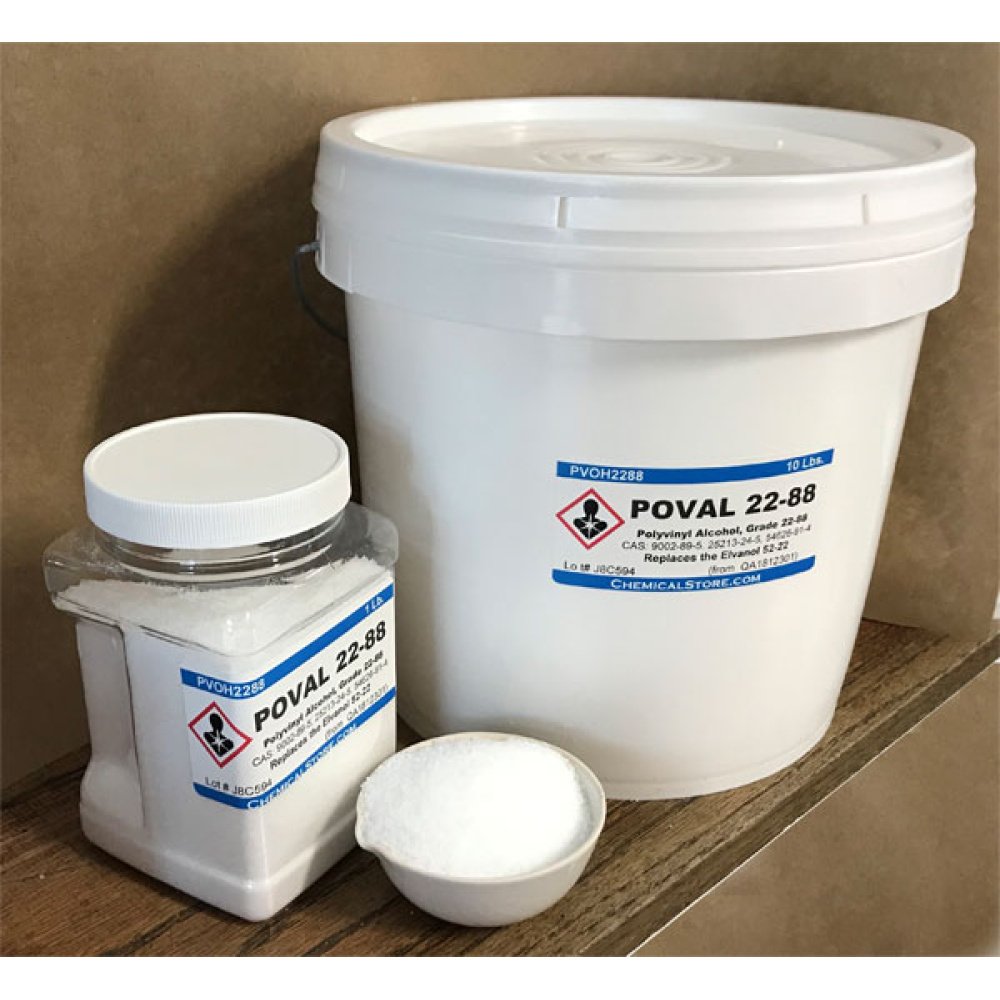
Polyvinyl alcohol is a highly versatile synthetic polymer used in many industrial processes. It is valued for its water solubility, film-forming ability, bonding strength, and compatibility with other materials. Among the recognized polyvinyl alcohol solutions available to manufacturers, elvanol offers dependable performance across paper, adhesives, textiles, ceramics, coatings, and other specialized applications. It is part of Kuraray’s broader PVOH product portfolio, which also includes poval grades designed for different performance requirements. By selecting the appropriate product grade, manufacturers can improve processing efficiency, product quality, and application consistency.
Understanding Elvanol Polyvinyl Alcohol
Elvanol is a brand of polyvinyl alcohol, commonly abbreviated as PVOH or PVA. It is manufactured through the polymerization of vinyl acetate monomer to form polyvinyl acetate, followed by hydrolysis or saponification to convert it into polyvinyl alcohol. The resulting material can be modified through its degree of hydrolysis, molecular weight, viscosity, and particle characteristics. These variables affect how the polymer dissolves, forms films, bonds with surfaces, and performs under different processing conditions.
Like poval, elvanol is not limited to a single product grade. Different grades can be selected according to the required solution viscosity, water-solubility behavior, film strength, and bonding capacity. This flexibility allows formulators to match the polymer with the technical needs of a particular manufacturing process.
Important Properties of Elvanol
One of the most important characteristics of elvanol is its excellent film-forming ability. When dissolved in water and applied to a surface, it can create a strong, smooth, and uniform film. This property is useful in coatings, textile sizing, adhesives, and paper treatment. The film can also provide resistance to oil, grease, and many solvents, depending on the formulation and surrounding conditions.
Elvanol also offers strong bonding power, making it suitable for materials such as paper, wood, textiles, leather, and other water-absorbent surfaces. Its combination of adhesion and film formation helps manufacturers create products that maintain their strength during processing and use. Kuraray also highlights good barrier properties and compatibility with many reactants among the core characteristics of its PVOH portfolio. Kuraray’s official ELVANOL overview
Improved Dissolution and Processing Efficiency
Dissolution is an important consideration when working with polyvinyl alcohol. The polymer must be properly dispersed and dissolved to form a consistent solution. Particle size, temperature, agitation, concentration, and water quality can all influence this process. Poor dissolution may cause lumps, uneven viscosity, processing delays, or inconsistent product performance.
The unique particle morphology of elvanol can support improved water solubility and shorter dissolving times. Certain grades can be dissolved in continuous cooking equipment originally designed for starch, where some standard polyvinyl alcohol materials may remain undissolved. This is particularly useful in paper-coating operations where starch and poval or other PVOH grades are used together. Faster dissolution may also help reduce energy consumption and simplify preparation procedures.
Elvanol in Paper and Paperboard
The paper industry uses polyvinyl alcohol to improve surface strength, pigment binding, print quality, and barrier performance. Elvanol can be incorporated into pigmented coatings, surface-sizing formulations, and specialty-paper treatments. Its ability to form a strong water-borne film helps strengthen the paper surface and reduce problems such as dusting or picking during printing.
When combined with starch, pigments, fillers, and other coating ingredients, elvanol can help produce a smoother and more uniform surface. Its compatibility with starch-processing systems can be especially valuable for mills seeking to improve production without making major equipment changes. Both elvanol and poval solutions can be considered for paper applications, but the final selection should be based on coating formulation, equipment, drying conditions, and desired paper properties.
Strong Performance in Adhesive Formulations
Polyvinyl alcohol is widely used in water-based adhesive systems because it provides both bonding strength and formulation stability. Elvanol can support adhesives developed for paper, cardboard, wood, textiles, and other porous materials. Its film-forming ability helps create a continuous adhesive layer, while its bonding power supports reliable contact between surfaces.
The polymer may also act as a protective colloid in certain emulsion systems, helping stabilize dispersed particles during manufacturing and storage. Formulators can adjust concentration and choose a suitable viscosity grade to control application behavior, drying time, and final bond strength. When comparing elvanol with a poval grade, manufacturers should test each material under actual operating conditions because performance may change according to substrate, temperature, additives, and processing speed.
Textile Sizing and Finishing Applications
Textile manufacturers use sizing materials to protect yarn during weaving. A suitable size can improve yarn smoothness, strength, elasticity, and abrasion resistance, helping reduce warp breakage and production interruptions. Elvanol forms a protective coating around spun or filament yarn while maintaining the toughness required for demanding weaving operations.
Special elvanol T grades are copolymers developed for the warp sizing of polyester-cotton blends and other spun yarns. Their increased solubility under alkaline conditions can support more effective desizing after weaving. Kuraray states that these grades can maintain their performance when recycled, which may improve process economy. Both poval and elvanol are also described as more effective than starch in certain textile-sizing applications. Kuraray’s textile application information
Use as a Ceramic Binder
Ceramic production requires binders that can hold fine particles together before firing. Elvanol can provide green strength to pressed ceramic components, helping them maintain their shape during molding, handling, and transportation. Its bonding performance may reduce chipping, cracking, or deformation before the final firing stage.
The particle morphology of elvanol can also promote more uniform blending with fine materials such as inorganic fillers. This can support a more consistent molded structure in compression-molding applications. Similar to poval, the ideal grade depends on powder composition, binder concentration, forming pressure, moisture content, and burnout conditions. Manufacturers should conduct laboratory and production trials to determine the appropriate balance between strength, flow, and clean removal during firing.
Coatings and Photosensitive Materials
Elvanol is also used in photosensitive coatings and other specialty surface treatments. Its ability to create transparent and uniform films makes it useful as a binder, carrier, or functional component. The hydroxyl groups present in polyvinyl alcohol allow it to interact with different additives and, where appropriate, participate in crosslinking reactions.
These characteristics give formulators flexibility when developing coatings with specific requirements for adhesion, flexibility, strength, or barrier performance. A selected poval or elvanol grade may also be modified through plasticizers, crosslinkers, fillers, pigments, and other formulation ingredients. Compatibility testing remains important because the final behavior depends on the complete formulation rather than the polymer alone.
Environmental and Operational Considerations
Water-based processing is one reason polyvinyl alcohol is attractive for many industrial applications. It can help manufacturers develop formulations that rely less heavily on organic solvents. Kuraray describes its polyvinyl alcohol portfolio as water-soluble, biodegradable, and recyclable. However, environmental performance should always be evaluated according to the selected grade, concentration, application, local treatment conditions, and intended disposal route.
Using elvanol efficiently can also create operational advantages. Faster dissolution may lower preparation time and energy requirements, while strong bonding performance may allow formulators to optimize the amount of binder used. Manufacturers should avoid making broad environmental claims without application-specific evidence, testing, and compliance documentation.
How to Select the Right Grade
Choosing the right polyvinyl alcohol requires more than selecting a familiar brand name. Manufacturers should consider the degree of hydrolysis, viscosity, molecular weight, solution concentration, dissolution temperature, and required film properties. The substrate, processing equipment, drying method, and end-use environment should also be evaluated.
For example, an adhesive producer may prioritize bonding strength and viscosity control, while a textile manufacturer may focus on abrasion resistance and easy desizing. A paper producer may need compatibility with starch and pigments, whereas a ceramic manufacturer may require uniform powder blending and green strength. Technical data sheets, safety data sheets, and controlled trials should therefore guide the choice between elvanol, poval, and other PVOH grades.
A Reliable Material for Modern Manufacturing
Elvanol provides manufacturers with a flexible combination of water solubility, film formation, adhesion, and processing performance. Its applications in paper, adhesives, textiles, ceramics, and specialty coatings demonstrate the broad value of polyvinyl alcohol in modern production. Special grades can also address more specific needs, including improved dissolution, alkaline desizing, and uniform blending with fine particles.
As part of Kuraray’s wider polyvinyl alcohol portfolio, elvanol complements poval by giving formulators additional choices for different manufacturing conditions. The best results come from selecting a grade based on measurable technical requirements and validating it through practical testing. With the correct formulation and processing controls, these PVOH materials can help improve product quality, manufacturing consistency, and overall operational efficiency.
