Introduction to Philosophical Questions
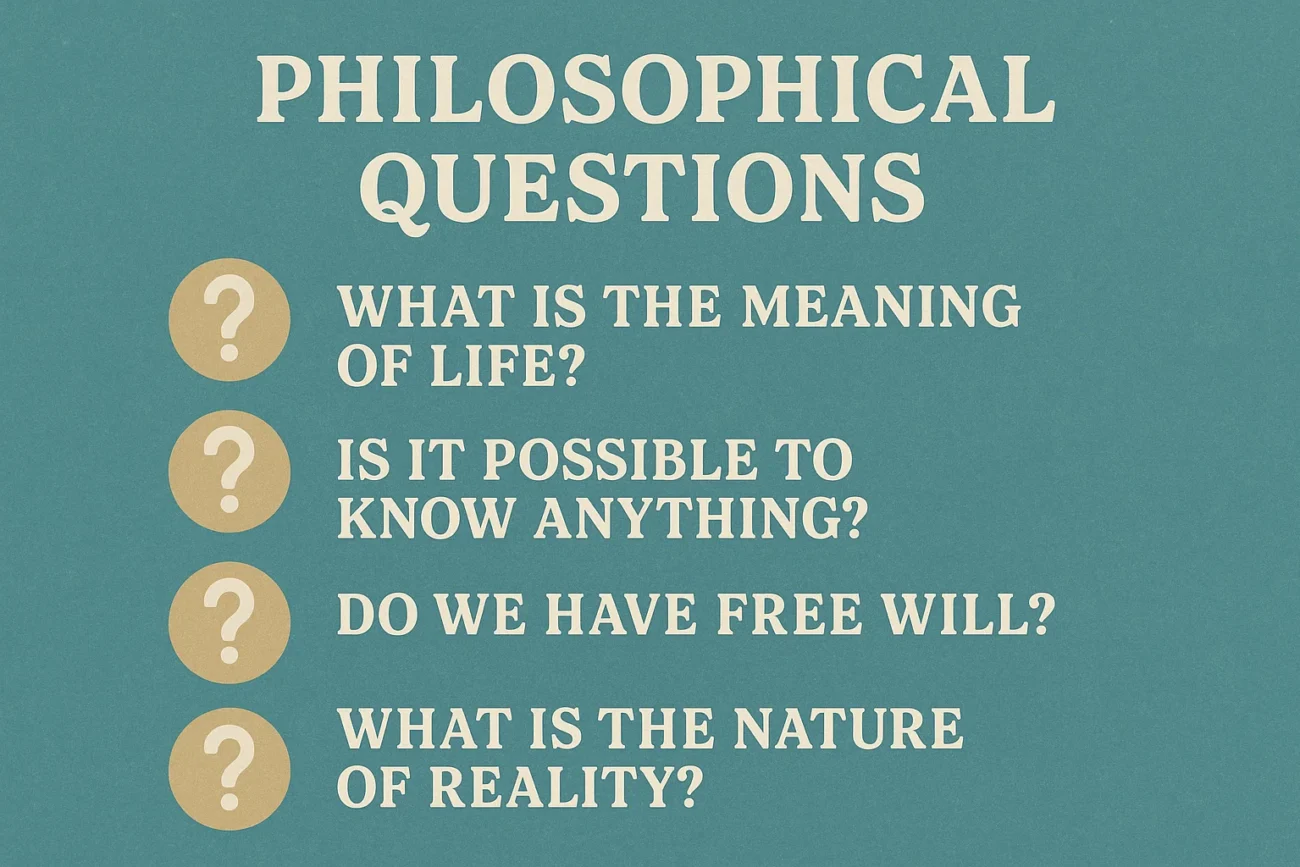
Philosophical questions are some of the oldest and most profound inquiries humanity has ever asked. Unlike practical questions that seek immediate answers, philosophy explores meaning, existence, truth, morality, and knowledge. They challenge assumptions, encourage deep thinking, and often lead to more questions rather than definitive conclusions. From ancient civilizations to modern societies, philosophy has shaped religions, sciences, ethics, and personal worldviews.
What makes philosophical questions unique is that they rarely have a single correct answer. Instead, they invite reflection, debate, and self-examination. They help individuals understand not only the world around them but also their place within it.
Why Philosophical Questions Matter
Philosophical questions matter because they form the foundation of critical thinking. By engaging with these questions, people learn how to analyze ideas, recognize biases, and evaluate arguments logically. This process strengthens reasoning skills that are useful in every area of life, from decision-making to problem-solving.
Beyond intellectual benefits, philosophical also have emotional and moral significance. They help individuals define values, confront fears, and make sense of life’s uncertainties. Asking why we exist, what is right or wrong, or what it means to be happy can lead to a deeper understanding of oneself and others.
Questions About Existence and Reality
One of the central areas of philosophy focuses on existence and reality. These questions ask what it means to exist and whether reality is objective or subjective. Philosophers have long debated whether the world exists independently of human perception or whether reality is shaped by the mind.
Common philosophical questions in this area include whether reality is fixed or constantly changing, whether time is real or an illusion, and whether there are multiple realities. These inquiries push people to examine assumptions about the physical world and the nature of being itself.
Philosophical Questions About Identity and the Self
Questions about identity explore who we are and what defines us. Is a person defined by their body, their mind, their memories, or their actions? Do individuals remain the same over time, even as their beliefs and experiences change?
Philosophical questions about the self also address free will and determinism. Do humans truly make their own choices, or are actions predetermined by biology, environment, or fate? These questions influence how people understand responsibility, guilt, and personal growth.
Moral and Ethical Philosophical Questions
 Ethics is one of the most practical branches of philosophy because it deals directly with how people should live. Moral philosophical questions examine concepts of right and wrong, justice, fairness, and responsibility.
Some ethical questions ask whether morality is universal or culturally relative. Others explore whether intentions matter more than outcomes or whether actions can be morally justified under extreme circumstances. These questions are especially relevant in modern society, where technology, politics, and global issues create complex moral dilemmas.
Questions About Knowledge and Truth
Philosophical questions about knowledge focus on how humans know what they know. What counts as true knowledge? Can we trust our senses, or are they deceptive? Is truth absolute, or does it depend on perspective?
This branch of philosophy, often called epistemology, challenges people to question sources of information and the limits of human understanding. In an age of misinformation and rapid technological change, philosophical questions about truth are more important than ever.
Philosophical Questions About Meaning and Purpose
Many people turn to philosophy when searching for meaning and purpose in life. These questions ask whether life has inherent meaning or whether individuals must create meaning for themselves. They also explore what makes life valuable or fulfilling.
Philosophers have offered various perspectives, ranging from religious interpretations to existential views that emphasize personal responsibility. These questions do not provide easy answers, but they encourage individuals to reflect on goals, values, and what truly matters.
The Role of Philosophical Questions in Everyday Life
Philosophical questions are not limited to classrooms or academic discussions. They appear in everyday decisions, relationships, and personal struggles. When someone asks whether a decision is fair, whether a belief is justified, or whether a goal is worth pursuing, they are engaging in philosophical thinking.
By becoming more aware of these questions, people can approach life with greater clarity and intention. Philosophy encourages slowing down, reflecting deeply, and considering alternative perspectives before acting.
How Philosophical Questions Encourage Open-Mindedness
Engaging with philosophical questions helps develop open-mindedness and intellectual humility. Since many philosophical problems do not have final answers, they teach people to tolerate uncertainty and respect differing viewpoints.
This openness is essential in diverse societies, where individuals with different beliefs must coexist and cooperate. Philosophical create space for dialogue rather than conflict, promoting understanding instead of division.
The Timeless Nature of Philosophical Questions
One of the most fascinating aspects of philosophical questions is their timelessness. Questions asked thousands of years ago remain relevant today. While technology and culture change, fundamental human concerns about existence, morality, and knowledge persist.
This continuity shows that philosophy is not outdated but deeply connected to the human condition. Each generation revisits these questions, adding new insights while building on the ideas of the past.
Philosophical Questions and Human Emotions
Philosophical questions are deeply connected to human emotions. Questions about love, fear, happiness, and suffering reveal how emotions influence thinking and decision-making. Philosophers have long examined whether emotions are obstacles to reason or essential components of a meaningful life.
Questions such as whether true happiness depends on external circumstances or inner peace encourage people to reflect on emotional well-being. By engaging with these inquiries, individuals can better understand their emotional responses and develop greater emotional intelligence.
Philosophical Questions About Society and Justice
Society raises some of the most complex philosophical questions. What makes a society just? Should equality mean equal opportunity or equal outcomes? How much freedom should individuals sacrifice for collective security?
These questions shape political systems, laws, and social norms. Philosophical debates about justice help people evaluate institutions and challenge unfair practices. They encourage active citizenship and critical engagement with societal issues rather than blind acceptance of authority.
Questions About Freedom and Responsibility
Freedom is a central theme in philosophy, closely linked to responsibility. Philosophical questions in this area explore whether true freedom exists and what it means to be responsible for one’s actions.
If human behavior is influenced by genetics, upbringing, and social conditions, can individuals still be held accountable? These questions are especially relevant in legal, ethical, and psychological discussions. They push people to consider compassion alongside accountability.
Philosophical Questions in Science and Technology
As science and technology advance, new philosophical questions emerge. Can machines think? Should artificial intelligence have moral status? Where should ethical boundaries be drawn in scientific experimentation?
These questions help guide responsible innovation. Philosophy acts as a bridge between technological capability and human values, ensuring progress aligns with ethical principles rather than purely technical goals.
Religious and Spiritual Philosophical Questions
Religion and spirituality have always been intertwined with philosophy. Philosophical questions in this domain explore the existence of a higher power, the nature of the soul, and the possibility of life after death.
These questions are not limited to religious belief; they also address doubt, faith, and personal meaning. Philosophy provides tools for examining spiritual ideas thoughtfully, allowing individuals to explore beliefs without fear or dogmatism.
The Role of Philosophical Questions in Personal Growth
Personal growth often begins with questioning oneself. Philosophical questions encourage self-awareness by prompting individuals to examine their beliefs, motivations, and life choices.
Questions such as what kind of person one wants to become or what values truly matter help guide long-term growth. Through reflection, people can align actions with principles and live more intentional lives.
Philosophical Questions and Education
Education benefits greatly from philosophical inquiry. When students are encouraged to ask philosophical questions, learning becomes active rather than passive. They move from memorizing information to understanding concepts deeply.
Philosophy teaches students how to think, not what to think. It fosters curiosity, critical reasoning, and respectful debate—skills that are valuable across all disciplines and careers.
Why Philosophical Questions Often Lack Final Answers
One reason philosophical questions endure is that they resist final answers. Human experiences, cultures, and perspectives are constantly changing, making absolute conclusions difficult.
Rather than being a weakness, this openness is a strength. It allows philosophical to remain relevant and adaptable, inviting each generation to reinterpret them in light of new experiences and knowledge.
How to Engage With Philosophical Questions Effectively
Engaging with philosophical questions does not require formal training. It begins with curiosity and a willingness to reflect honestly. Reading diverse perspectives, engaging in dialogue, and questioning assumptions are effective ways to explore philosophical ideas.
Patience is essential, as deep questions take time to understand. The goal is not to reach quick conclusions but to develop thoughtful insight and intellectual humility.
Philosophical Questions as a Lifelong Journey
Philosophy is not something that ends with an answer; it is a lifelong journey of inquiry. As people grow and encounter new experiences, old questions gain new meaning.
Philosophical questions evolve alongside the individual, offering guidance during moments of uncertainty and change. They serve as companions in the search for understanding rather than problems to be permanently solved.
Conclusion
Philosophical questions may not provide clear-cut answers, but their value lies in the act of questioning itself. They challenge people to think deeply, live thoughtfully, and engage meaningfully with the world. By exploring philosophical, individuals gain insight into themselves, others, and the nature of reality.
In a fast-paced world driven by instant answers, philosophical questions remind us of the importance of reflection. They encourage curiosity, wisdom, and a deeper appreciation of life’s complexity—making them as essential today as they have ever been.
You May Also Read Here: Newtopy
