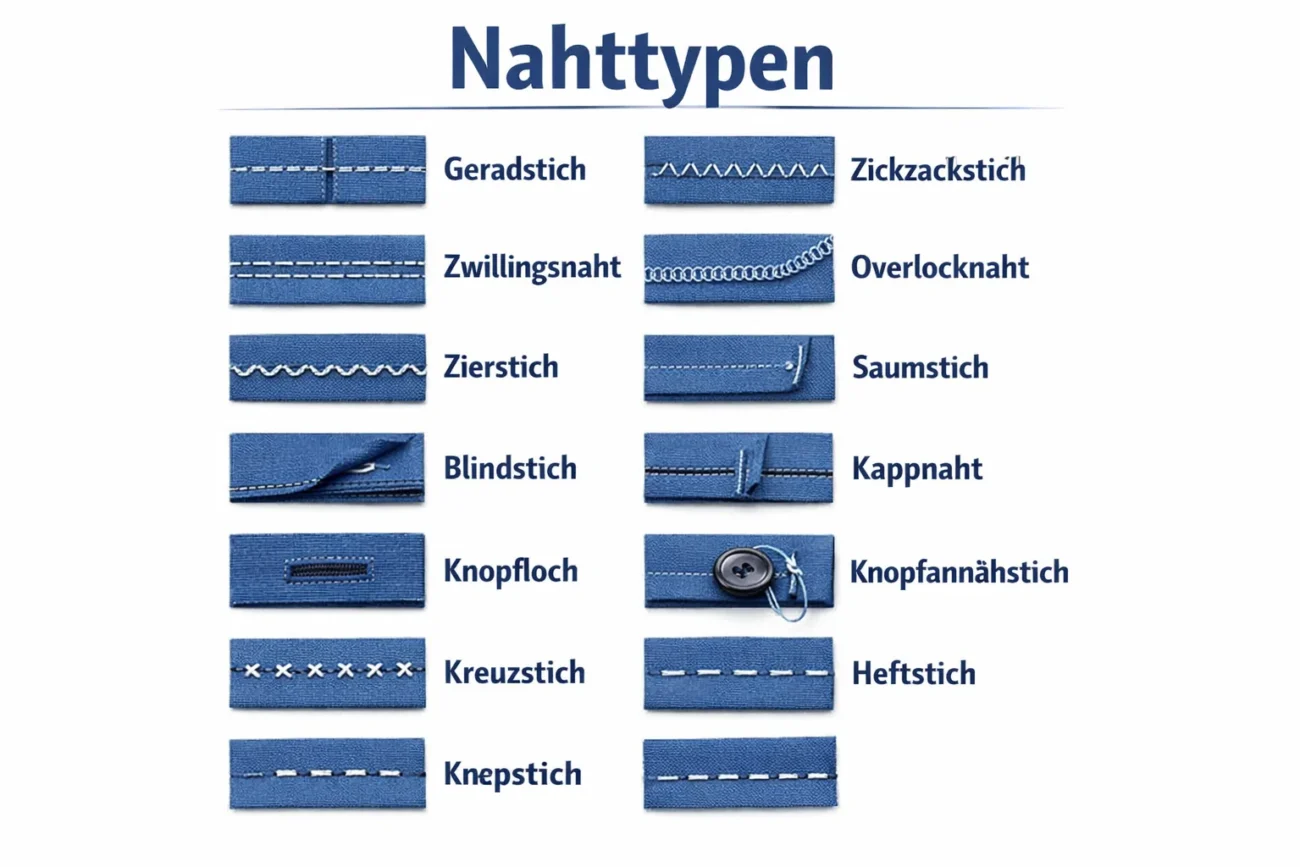
Introduction to Nahttypen
Nahttypen, a German term that translates to “seam types” in English, is a fundamental concept in sewing, tailoring, and textile manufacturing. Understanding Nahttypen is crucial for anyone involved in garment construction, upholstery, or fabric crafting. The selection of the correct seam type not only affects the appearance of the finished product but also its strength, durability, and functionality.
Over time, various Nahttypen have been developed to cater to different fabric types, garment styles, and usage requirements. From basic seams suitable for light fabrics to complex designs meant for heavy-duty materials, the world of Nahttypen is rich and diverse.
Importance of Nahttypen in Sewing and Fashion
Nahttypen play a pivotal role in both fashion design and practical sewing applications. The seam chosen for a garment influences not only its aesthetic appeal but also its structural integrity. For instance, a simple straight seam may suffice for lightweight cotton, but heavier fabrics like denim or leather require reinforced seams to prevent fraying or tearing.
Designers and seamstresses must understand how different Nahttypen interact with fabric properties such as stretch, thickness, and texture. Furthermore, seam types can define style elements, adding decorative or functional features to a garment. For example, topstitched seams often create a visual accent while simultaneously increasing durability.
Basic Nahttypen
The most basic Nahttypen include straight seams, zigzag seams, and overlocked seams. These foundational seam types are widely used in home sewing and beginner projects. A straight seam, or plain seam, is the most common, formed by placing two fabric pieces together and stitching along the edge. Zigzag seams provide flexibility and are ideal for stretch fabrics, preventing the seam from splitting under tension. Overlocked seams, created with a serger, prevent fraying and offer a neat finish, making them suitable for professional garment construction.
Reinforced and Specialized Nahttypen
Beyond basic seams, there are reinforced and specialized Nahttypen designed to enhance strength or serve particular purposes. French seams, for instance, encase the raw edges within the seam, resulting in a clean and durable finish suitable for sheer fabrics. Flat-felled seams are another example, commonly seen in denim jeans, where the seam is folded and stitched to create a highly robust joint.
Other specialized seam types include welt seams, mock flat-felled seams, and bound seams, each providing unique benefits in terms of strength, flexibility, or visual appeal. These Nahttypen are essential in professional garment making, especially for items subjected to stress, such as sportswear, outerwear, and heavy-duty uniforms.
Decorative Nahttypen
 Nahttypen are not purely functional; they can also serve decorative purposes. Topstitching, for instance, adds aesthetic appeal while reinforcing the seam. Piping seams, which incorporate a cord between layers of fabric, create a pronounced visual edge, often used in upholstery and high-end fashion. Embroidered seams further enhance the decorative potential of Nahttypen, combining stitching techniques with ornamental patterns. Fashion designers frequently experiment with decorative seams to create signature looks, elevate garment design, and provide a unique tactile experience.
Seam Selection According to Fabric
The choice of Nahttypen is closely linked to fabric type. Lightweight fabrics like chiffon, silk, or organza require delicate seam types that prevent fraying and maintain a smooth silhouette, such as French seams. Medium-weight fabrics, including cotton or linen, are versatile and compatible with plain seams, zigzag seams, or overlocked seams. Heavy fabrics like wool, denim, or canvas demand strong, reinforced seams such as flat-felled seams or bound seams to endure stress and wear. Understanding the relationship between fabric properties and seam types is crucial for achieving professional results and extending the life of the garment.
Seam Finishing Techniques
Seam finishing is an integral part of Nahttypen, enhancing durability and appearance. Raw edges can be finished using overlocking, bias binding, or pinking shears. Overlocking seals edges and prevents fraying, bias binding encases the raw edge in a strip of fabric for a polished look, and pinking shears create a zigzag cut that minimizes fraying. Each finishing method complements specific Nahtty and fabric types, ensuring that the seam not only holds the garment together but also contributes to a clean, professional finish.
Industrial Applications of Nahttypen
In industrial textile manufacturing, Nahttypen are chosen with precision to optimize production efficiency and product quality. Automated sewing machines can create specialized seams like flat-felled or overlocked seams at high speed, ensuring uniformity across large-scale production. Industrial applications often require balancing speed, durability, and fabric compatibility, making knowledge of Nahtty essential for engineers, quality control specialists, and production managers. Beyond apparel, seam types are crucial in products such as tents, backpacks, upholstery, and technical fabrics, where durability and precision are paramount.
Nahttypen in Modern Fashion Design
Contemporary fashion designers leverage Nahttypen creatively to push the boundaries of garment aesthetics. Exposed seams, asymmetrical stitching, and layered seam designs are examples of how traditional seam types are reimagined to create innovative styles. Designers may combine multiple seam types in a single garment, balancing functionality and artistic expression. Knowledge of Nahtty empowers designers to manipulate fabric, structure garments innovatively, and achieve distinctive silhouettes, demonstrating the integral role of seams in the evolution of modern fashion.
Nahttypen in Tailoring and Bespoke Clothing
Tailors and bespoke garment makers place special emphasis on Nahttypen to achieve perfect fit, finish, and durability. Customized suits, coats, and formal wear often incorporate hand-finished seams, reinforcing key stress points while maintaining a sleek appearance. Tailors may employ pad stitching, fell stitching, or hand-basted seams to achieve precision and longevity. In bespoke clothing, Nahtty are not just functional elements; they reflect craftsmanship, attention to detail, and the overall quality of the garment. Clients often recognize the excellence of a tailor by the meticulous execution of seam types.
Innovations in Nahttypen Technology
Advancements in sewing technology have introduced new possibilities in Nahttypen. High-performance threads, laser cutting, and computer-controlled stitching machines allow the creation of complex seam structures previously impractical or impossible. Modern innovations also include seams designed for stretchable sports fabrics, waterproof technical fabrics, and even smart textiles embedded with sensors. These technological developments ensure that Nahtty remains relevant and adaptable to evolving material sciences and design trends, demonstrating the dynamic nature of seam engineering.
Common Mistakes in Choosing Nahttypen
Despite their importance, improper selection of Nahttypen is a frequent issue for beginners and even experienced seamstresses. Choosing a weak seam for heavy fabrics, neglecting seam finishing, or underestimating stress points can lead to garment failure. Similarly, overcomplicating a seam for lightweight fabrics can result in unnecessary bulk or stiffness. Awareness of common mistakes, coupled with proper training in seam selection and execution, is vital for achieving durable, aesthetically pleasing, and functional garments.
Nahttypen for Home Sewing Projects
Home sewing enthusiasts benefit greatly from understanding Nahttypen. Simple projects like pillow covers, curtains, or casual clothing can be elevated with proper seam selection. Beginners often start with straight seams and zigzag finishes, while intermediate sewers may experiment with French seams, flat-felled seams, and decorative topstitching. Learning about Nahtty empowers hobbyists to expand their skill set, improve project quality, and develop confidence in handling a variety of fabrics and garment types.
Nahttypen in Upholstery and Textile Crafts
Beyond apparel, Nahttypen are vital in upholstery, textile crafts, and home décor. Heavy fabrics used in sofas, cushions, and drapery require durable seams such as bound seams or reinforced overlocked seams. Craft projects involving quilts, tote bags, or fabric art benefit from decorative seam types that enhance both structure and visual appeal. Understanding which Nahtty to employ in different textile applications ensures that both functional and decorative goals are achieved, highlighting the versatility of seam types in various creative fields.
Practical Tips for Working with Nahttypen
When working with Nahttypen, there are several practical tips that can make sewing more efficient and result in higher-quality seams. First, always prewash fabrics to prevent shrinkage, as seam alignment can be affected if the fabric changes size after stitching. Use the right needle type for the fabric: ballpoint needles for knits, sharp needles for woven fabrics, and heavy-duty needles for thick materials.
Matching thread strength to the fabric is equally important; lightweight fabrics require fine threads, while heavier fabrics need robust threads to prevent seam failure. Additionally, pressing seams during construction ensures flat, professional-looking results and helps maintain seam integrity.
Advanced Nahttypen Techniques
Beyond basic and reinforced seams, advanced Nahttypen techniques are used in couture and high-end garment production. One example is the princess seam, a type of vertical seam that curves along the body, providing shape and structure without darts. Another advanced technique is ladder stitching, often used for hand-finishing hems or attaching linings invisibly. These techniques require precision and patience but result in garments that are both aesthetically pleasing and structurally sound. Mastering advanced seam techniques is a hallmark of skilled seamstresses and tailors, demonstrating expertise in both function and design.
Educational Resources and Training in Nahttypen
Mastering Nahttypen requires education and hands-on experience. Many sewing schools, vocational programs, and online tutorials provide structured training in seam types, including demonstrations of execution techniques, fabric compatibility, and finishing methods. Books and guides dedicated to sewing often include comprehensive charts of Nahtty with illustrations, enabling learners to understand and practice each seam type effectively. Continuous learning and experimentation are essential for achieving mastery, whether for professional or hobbyist purposes.
Conclusion
Nahttypen encompasses both the art and science of sewing, blending functional engineering with creative expression. The selection, execution, and finishing of seams impact garment durability, comfort, and aesthetics, making them a cornerstone of textile craftsmanship. From basic straight seams to intricate reinforced and decorative designs, Nahtty offers endless possibilities for designers, tailors, and sewing enthusiasts.
Mastery of seam types ensures not only professional-quality garments but also opens doors to innovative fashion design, industrial production excellence, and creative textile crafts. Understanding Nahttypen is thus essential for anyone seeking to explore the full potential of fabrics and garment construction, bridging tradition with modernity in the ever-evolving world of textiles.
You May Also Read Here: Oncepik
