Introduction
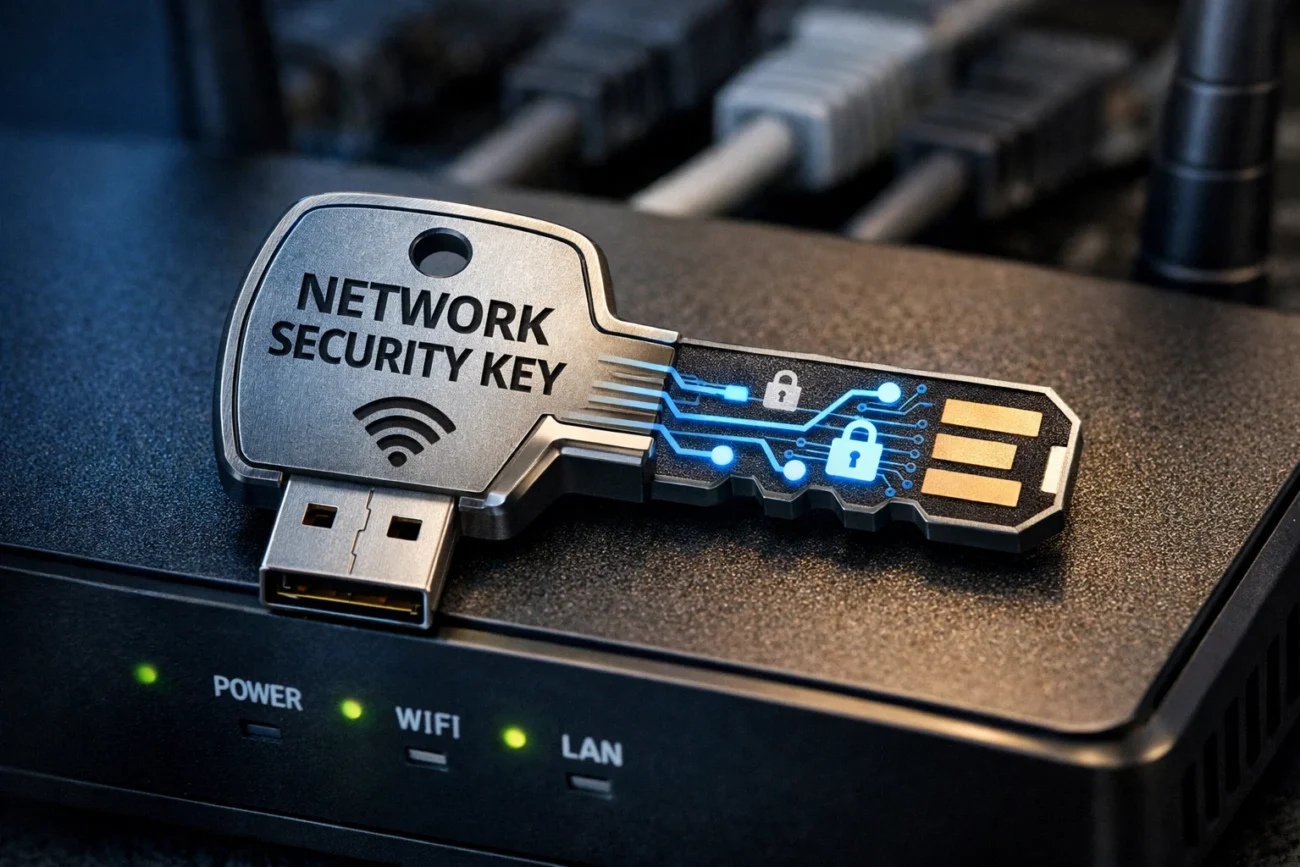
A network security key is the cornerstone of modern wireless communication, acting as the primary safeguard that prevents unauthorized users from accessing a network. In simple terms, a network security is the password or passphrase required to connect a device to a Wi-Fi network, but its role extends far beyond basic access control.
It encrypts data transmitted between devices and routers, ensuring that sensitive information such as login credentials, personal messages, and financial details remain protected from cyber threats.
As wireless networks have become an integral part of homes, businesses, and public spaces, the importance of a strong and well-managed network security key has grown exponentially, making it a critical element of digital safety in today’s connected world.
Network Security Key and Its Role in Wireless Encryption
The network security key functions as the foundation for wireless encryption protocols that protect data from interception. When a device connects to a Wi-Fi network, the network security key is used to generate encryption keys that scramble the data being transmitted. This process ensures that even if cybercriminals manage to intercept wireless signals, they cannot decipher the information without the correct key.
Encryption standards such as WPA2 and WPA3 rely heavily on network security to establish a secure communication channel, highlighting their essential role in maintaining confidentiality, integrity, and authenticity within wireless networks.
Network Security Key Evolution in Wireless Networking
The concept of a network security key has evolved alongside wireless technology. Early Wi-Fi networks used WEP (Wired Equivalent Privacy), which relied on static keys that were relatively easy to crack. As cyber threats advanced, the industry introduced stronger protocols like WPA and WPA2, each improving how network security is generated and managed.
Today, WPA3 represents the latest evolution, offering enhanced protection through individualized data encryption and stronger handshake processes. This evolution demonstrates how network security has transformed from a basic password into a sophisticated security mechanism designed to counter modern cyber risks.
Network Security Key in Home Wi-Fi Environments
In home networks, the network security key serves as the first line of defense against unauthorized access. Many users rely on default keys provided by their internet service providers, often printed on the router label. While convenient, these default network security csettings an pose security risks if not changed, as they may be predictable or widely known.
Creating a unique and complex network security key for home Wi-Fi significantly reduces the risk of neighbors or malicious actors gaining access, helping protect personal data, smart home devices, and online activities from potential breaches.
Network Security Key Importance for Business Networks
For businesses, the network security key is far more than a simple password; it is a critical component of organizational cybersecurity strategy. Business networks often handle sensitive customer data, proprietary information, and internal communications, all of which depend on secure wireless access. A compromised network security can lead to data leaks, financial losses, and reputational damage.
As a result, enterprises often implement advanced key management practices, including regular key rotation, segmented networks, and integration with authentication systems, to ensure that the network security remains secure and resilient against attacks.
Network Security Key and Public Wi-Fi Risks
Public Wi-Fi networks frequently highlight the importance of a properly implemented network security key. Many public hotspots either use weak security keys or none at all, exposing users to risks such as man-in-the-middle attacks and data interception. When a public network does use a network security, it is often shared widely, reducing its effectiveness. This scenario underscores why users should exercise caution when connecting to public Wi-Fi and why network administrators must carefully balance accessibility and security when configuring network security in shared environments.
Network Security Key vs. Wi-Fi Password
Although often used interchangeably, the terms network security and Wi-Fi password have subtle distinctions. A Wi-Fi password is the user-facing representation of the network security key, while the underlying key is used by encryption algorithms to secure data. The network security may be derived from the password through cryptographic processes, depending on the encryption protocol in use. Understanding this distinction helps users appreciate that choosing a strong password directly influences the effectiveness of the network security and, by extension, the overall security of the network.
Network Security Key and Encryption Standards
The strength of a network security key is closely tied to the encryption standard it supports. WPA2 uses AES encryption, which relies on the network security to generate secure session keys. WPA3 further enhances this process by implementing Simultaneous Authentication of Equals (SAE), reducing the risk of brute-force attacks even if the network security is weak. These standards demonstrate how the network security works in tandem with encryption technologies to provide layered protection against evolving cyber threats.
Network Security Key Management Best Practices
Effective management of a network security key is essential for maintaining long-term network security. This includes creating a complex key that combines uppercase and lowercase letters, numbers, and symbols, as well as changing it periodically to reduce exposure. Storing the network security securely and limiting access to trusted users are equally important practices. By adopting disciplined key management strategies, individuals and organizations can significantly reduce the likelihood of unauthorized access and maintain a robust security posture.
Network Security Key and Internet of Things Devices
The rise of Internet of Things (IoT) devices has expanded the role of the network security key beyond traditional computers and smartphones. Smart thermostats, cameras, speakers, and appliances all rely on network security to connect securely to Wi-Fi networks. A weak or compromised key can expose these devices to hacking, potentially allowing attackers to spy on users or disrupt home systems. This makes network security a critical factor in safeguarding the growing ecosystem of connected devices that define modern smart environments.
Network Security Key in Educational Institutions
Educational institutions such as schools and universities manage large wireless networks that serve students, faculty, and guests. In these environments, the network security key must balance ease of access with security. Often, institutions use multiple keys or authentication systems to segment access and protect sensitive academic and administrative data. The network security plays a vital role in ensuring that only authorized users can access internal resources while maintaining a seamless learning experience.
Network Security Key and Cyberattack Prevention
A strong network security key is a powerful deterrent against common cyberattacks. Brute-force attacks, for example, rely on repeatedly guessing passwords until the correct one is found. A complex and lengthy network security significantly increases the time and resources required for such attacks, often making them impractical. Additionally, secure key protocols reduce vulnerability to dictionary attacks and unauthorized monitoring, reinforcing the network’s defenses against a wide range of cyber threats.
Network Security Key Troubleshooting and Common Issues
Users often encounter issues related to the network security key, such as incorrect password errors or connection failures. These problems may arise from typing mistakes, outdated device settings, or mismatched encryption protocols. Understanding how the network security functions can help users diagnose and resolve these issues more effectively. Resetting the router, updating device firmware, or reconfiguring network settings are common solutions that restore secure connectivity without compromising the integrity of the network.
Network Security Key and Mobile Device Connectivity
Mobile devices rely heavily on the network security key to maintain secure wireless connections while on the move. Smartphones and tablets frequently connect to multiple networks, storing keys for convenience. While this enhances usability, it also introduces security considerations if devices are lost or stolen. Protecting stored network security through device encryption and strong lock-screen security helps prevent unauthorized access and ensures that wireless credentials remain safe.
Network Security Key in Remote Work Environments
The growth of remote work has elevated the importance of a secure network security key in home offices. Employees accessing corporate resources from personal networks must ensure that their Wi-Fi is protected by a strong key to prevent unauthorized access. A compromised home network security can serve as an entry point for attackers seeking to infiltrate business systems. This reality has prompted organizations to emphasize secure home networking practices as part of their overall cybersecurity strategy.
Network Security Key and Router Configuration
Routers are the central hubs where network security is generated, stored, and enforced. Proper router configuration is essential for maximizing the effectiveness of the network security key. This includes selecting the latest encryption standards, disabling outdated protocols, and ensuring that firmware is regularly updated. By configuring routers correctly, users can strengthen the protection offered by the network security and reduce exposure to known vulnerabilities.
Network Security Key Privacy Considerations
Privacy is closely linked to how a network security key is managed and shared. Sharing a key too freely increases the risk of unauthorized access and data exposure. Each additional user with access to the network security represents a potential vulnerability. Being mindful of who has access and revoking permissions when no longer needed helps preserve privacy and maintain control over network usage.
Network Security Key and Compliance Requirements
In regulated industries, the network security key can play a role in meeting compliance standards related to data protection and cybersecurity. Regulations often require secure access controls and encryption to protect sensitive information. A properly implemented and managed network security helps organizations demonstrate compliance with these requirements, reducing legal risks and reinforcing trust with customers and stakeholders.
Network Security Key Future Trends
As wireless technology continues to advance, the network security key is expected to evolve further. Emerging standards and technologies aim to simplify secure access while enhancing protection against sophisticated attacks. Biometric authentication, device-based credentials, and automated key management systems may complement or transform how network security is used in the future. These trends highlight the ongoing importance of network security as a dynamic and evolving element of cybersecurity.
Network Security Key as a Pillar of Digital Safety
The network security key remains one of the most fundamental yet powerful tools for protecting wireless networks. From home users to large enterprises, its role in controlling access, encrypting data, and preventing cyber threats cannot be overstated. By understanding its function, importance, and best practices, users can take meaningful steps toward securing their digital environments. In an era defined by constant connectivity, network security stands as a vital pillar of trust, privacy, and safety in the wireless world.
