Introduction
The concept of recall email Outlook is one of the most sought-after tools for professionals who frequently use Microsoft Outlook for business communication. In a world where a mistyped word, forgotten attachment, or wrong recipient can have serious consequences, the ability to recall an email provides an invaluable safety net. Microsoft Outlook includes a feature specifically designed to attempt to retract or replace a message after it has been sent.
This feature, known as “Recall Email,” allows users to either delete an unread message from the recipient’s inbox or replace it with a corrected version. However, understanding how to properly use recall email Outlook requires knowledge of several conditions, limitations, and best practices to maximize success.
How Recall Email Outlook Works
The recall email Outlook feature functions by sending a special request to the recipient’s mailbox, signaling that the original email should be deleted or replaced. This process is not instantaneous and relies on the recipient meeting certain conditions: their mailbox must be hosted on Microsoft Exchange, the email must remain unread, and both sender and recipient must be within the same organization or domain.
When a recall request is initiated, Outlook attempts to remove the original email and optionally deliver a replacement version. Users receive notifications regarding the success or failure of the recall, which can help them assess whether follow-up communication is necessary.
Step-by-Step Guide to Using Recall Email Outlook
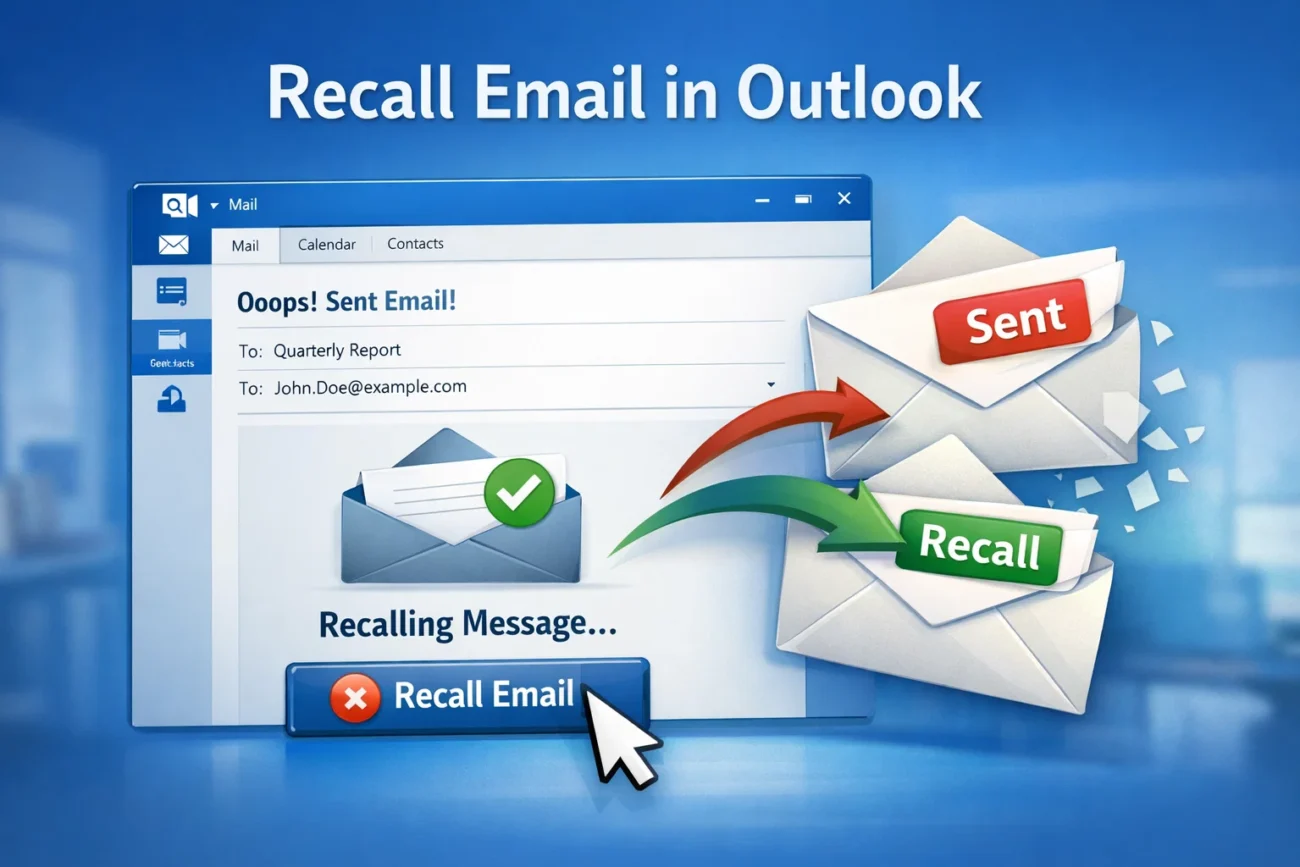
Successfully executing a recall email Outlook requires careful attention to the process. First, open Outlook and navigate to the “Sent Items” folder to locate the email you want to recall. Next, open the message, click on the “Message” tab, select “Actions,” and then choose “Recall This Message.” You will be presented with two options: delete the unread copies of the message or delete and replace with a new message.
Once you select your preferred option and confirm, Outlook initiates the recall process. Users should also consider sending a follow-up email explaining the correction to ensure clarity in case the recall is unsuccessful. Understanding each step increases the likelihood of a successful recall email Outlook operation.
Conditions Affecting the Success of Recall Email Outlook
The success of a recall email Outlook depends on several critical factors. The recipient must be using Outlook and connected to an Exchange server; if they are using a different email client or a mobile device, the recall may fail. The message must also remain unread; if the recipient opens it before the recall request is processed, the original email will not be deleted.
The feature works best within organizational boundaries, as cross-domain recall attempts are often blocked by security measures. Awareness of these conditions allows users to make informed decisions about when and how to attempt a recall email Outlook.
Common Scenarios Where Recall Email Outlook Is Used
Many professionals rely on recall email Outlook in specific situations where sending incorrect information could have repercussions. Examples include accidentally sending sensitive information to the wrong recipient, forgetting to attach important documents, or noticing spelling or formatting errors in the original message.
In these cases, recalling the email allows the sender to rectify the mistake and maintain professional credibility. Additionally, recall can be useful for internal communications where corrections are needed quickly without alerting the recipient to the original error.
Limitations and Challenges of Recall Email Outlook
Despite its usefulness, recall email Outlook comes with limitations that users must understand. Recall is not guaranteed; even within the same organization, technical issues, client settings, or mobile access can prevent the recall from working. Moreover, recipients often receive a notification that an email recall was attempted, which may draw attention to the original message.
Users should also note that recall does not function on emails sent to public domains like Gmail, Yahoo, or other non-Exchange platforms. Recognizing these limitations is crucial for managing expectations and planning alternative corrective actions.
Tips for Maximizing the Success of Recall Email Outlook
To improve the likelihood of a successful recall email Outlook, users should follow several best practices. Sending emails with clear subject lines and reviewing content carefully before hitting “Send” reduces the need for recall. When a mistake is discovered, acting quickly to initiate the recall increases success, as messages that are still unread are more likely to be removed.
Communicating with recipients beforehand or following up with a clarification can also help mitigate potential misunderstandings. Utilizing Outlook’s delay-send feature can serve as a proactive approach to prevent situations requiring a recall.
Alternatives to Recall Email Outlook
While recall email Outlook is helpful, alternatives exist that may provide more reliable results. Using delay delivery or scheduled send allows users to review emails for accuracy before they reach recipients. Drafting emails carefully and double-checking attachments ensures that errors are minimized.
In situations where a recall is unlikely to succeed, sending a corrective follow-up email explaining the error and providing the correct information may be more effective. Understanding alternatives helps users maintain communication integrity even when recall is not feasible.
Best Practices Before Using Recall Email Outlook
Before attempting a recall email Outlook, it is essential to implement preventive strategies. Double-checking recipients, reviewing the content thoroughly, and attaching necessary files can reduce the need to recall messages. Many professionals use the “Delay Delivery” feature in Outlook, which holds outgoing emails for a set period—typically a few minutes—allowing last-minute corrections before the message leaves the outbox.
Combining delay delivery with careful proofreading ensures that even if an email is sent to multiple recipients, mistakes can be caught early. Following these best practices makes recall email Outlook more of a safety backup than a necessity.
Email Etiquette and Communication Considerations
Using recall email Outlook is not only a technical matter but also a question of etiquette. When an email is recalled, recipients often receive a notification indicating that a message was retracted. This can draw attention to the mistake rather than hide it entirely. It’s important to craft follow-up messages professionally, acknowledging errors where necessary and providing clarification.
For example, if a sensitive document was sent in error, a polite note explaining the correction demonstrates accountability. Understanding how recall email Outlook interacts with workplace communication norms is crucial for maintaining professional relationships.
Impact of Mobile Devices on Recall Email Outlook
In today’s mobile-first work environment, one of the biggest challenges with recall email Outlook is that many recipients access emails on smartphones or tablets. When emails are opened on mobile apps like Outlook for iOS or Android, the recall function often fails because the message is marked as read, even if the recipient has not actively reviewed it. This limitation emphasizes the importance of sending emails carefully and using delay-send options. Users must recognize that while recall email Outlook works best in desktop-to-desktop Exchange environments, mobile access can significantly reduce success rates.
Advanced Settings and Configurations in Recall Email Outlook
Outlook offers several advanced settings that can influence how recall email Outlook operates. For example, enabling read receipts and delivery notifications can help track whether the recipient has opened the original message. Additionally, using Exchange server configurations, administrators can set policies that allow or restrict email recall features across the organization. Awareness of these settings empowers both users and IT teams to manage expectations and optimize the recall process for internal communications.
Troubleshooting Common Recall Email Outlook Issues
Even experienced users may encounter challenges when attempting a recall email Outlook. Common issues include failed recalls due to unread messages being opened, email clients that do not support the feature, or misconfigured Exchange settings. Troubleshooting begins with verifying that the recipient’s mailbox meets recall conditions and that Outlook is updated to the latest version.
Checking server policies, recipient email client, and mobile access helps identify barriers. In some cases, IT support intervention may be required to ensure that recall functionality operates as intended.
Case Studies and Real-World Examples
Several real-world examples illustrate how recall email Outlook can impact professional communication. In corporate settings, executives have successfully recalled sensitive internal memos, preventing potential confusion or breaches. In other cases, recall attempts have failed, highlighting the importance of understanding limitations and conditions. Reviewing case studies helps users recognize scenarios where recall is most effective and where alternative communication strategies are necessary.
The Future of Recall Email Outlook
As email continues to evolve, the functionality and reliability of recall email Outlook may also improve. Integration with AI-driven email assistants could provide real-time error detection and automatic recall suggestions, reducing human error.
Enhanced mobile support and cross-platform capabilities could expand the feature’s usefulness beyond Exchange-only environments. Staying informed about updates and emerging features ensures that users can leverage recall email Outlook effectively in increasingly complex digital communication landscapes.
Conclusion
Recall email Outlook is a powerful yet nuanced feature within Microsoft Outlook that offers users a chance to correct mistakes after sending emails. While success depends on specific conditions, technical limitations, and timely action, understanding the process, limitations, and best practices maximizes the feature’s effectiveness.
By combining careful email composition, proactive use of delay-send functions, and strategic follow-ups, professionals can use recall email Outlook to maintain credibility, reduce errors, and manage communications more efficiently. As technology advances, this feature may become even more reliable and integrated, cementing its role as an essential tool for modern email management.
