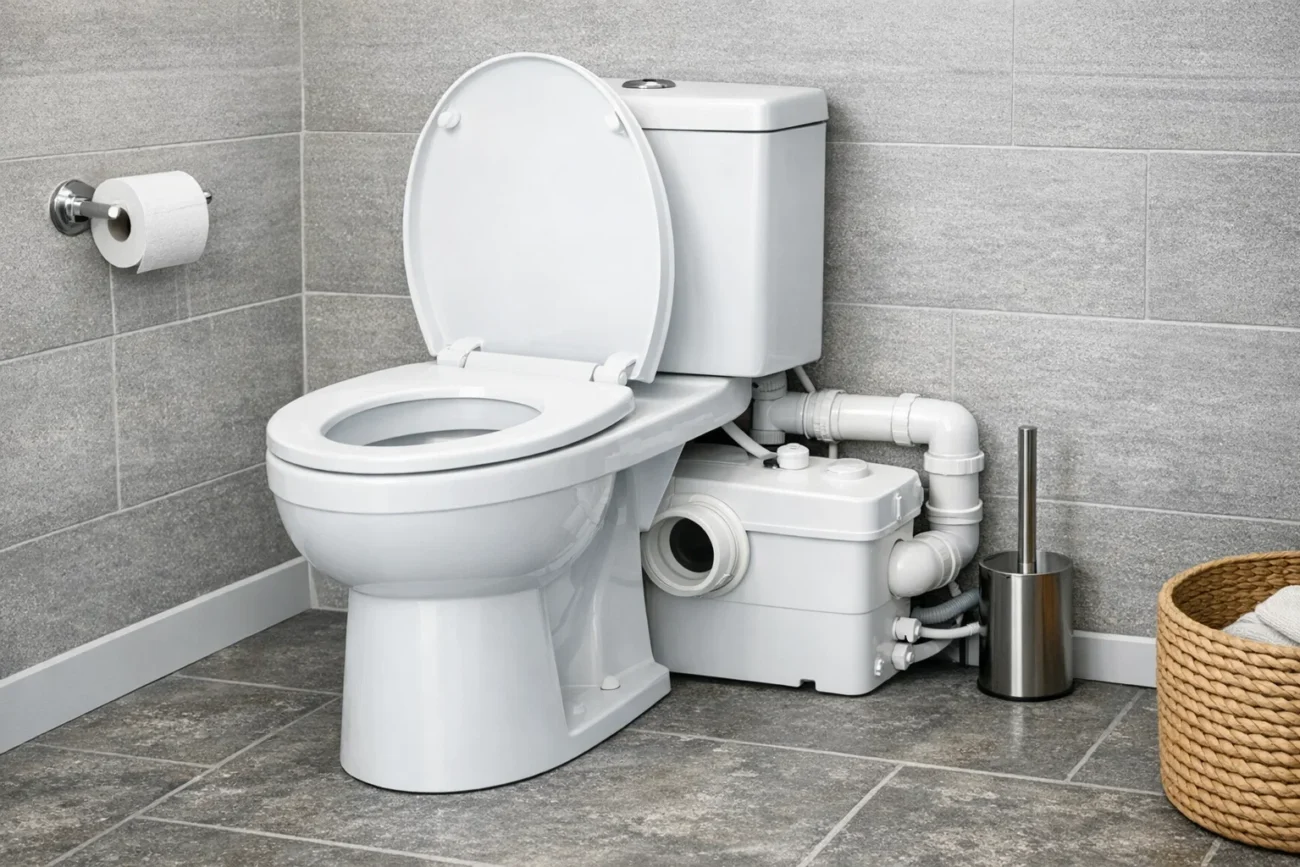
Introduction to the Macerating Toilet
A macerating toilet represents a significant innovation in modern plumbing, offering an effective solution for homes and commercial spaces where traditional plumbing setups are difficult or costly to install. Unlike conventional toilets that rely on gravity and large-diameter waste pipes, macerating toilets use a powerful grinding mechanism to break down waste and toilet paper into a fine slurry.
This slurry is then pumped through narrow pipes, allowing for installation in locations far from the main sewer line or below the level of the sewer. This unique design makes the macerating toilet ideal for basement bathrooms, attics, or any renovation project where conventional plumbing may be impractical.
How a Macerating Toilet Works
The key feature of a macerating toilet is its macerator, a motorized component located either at the back of the toilet or in a separate unit. When the toilet is flushed, waste and water enter the macerator chamber, where rotating blades grind the waste into a fine slurry. This process significantly reduces the risk of clogs and allows the slurry to be pumped uphill or horizontally over long distances.
The macerated waste is then expelled into standard narrow-diameter pipes, which ultimately connect to the main sewer or septic system. This mechanism not only enhances plumbing flexibility but also enables homeowners to add bathrooms in previously inaccessible areas without major structural changes.
Benefits of Installing a Macerating Toilet
Installing a macerating toilet offers numerous advantages for homeowners, landlords, and businesses. One of the primary benefits is flexibility in bathroom placement. Since macerating toilets do not require gravity-fed plumbing, they can be installed below sewer lines, such as in basements, or in areas far from the main stack.
The compact nature of the macerator allows for space-saving designs, making it ideal for small bathrooms or powder rooms. Another benefit is reduced installation cost compared to traditional plumbing renovations, as fewer pipes and less excavation are required. Macerating toilets are designed to prevent blockages, making maintenance easier and ensuring reliable operation over time.
Common Applications for Macerating Toilets
A macerating toilet is particularly useful in scenarios where traditional plumbing would be difficult or expensive to install. Basements are the most common application, as conventional toilets require a slope in the waste pipe that may not be feasible below ground level. Macerating toilets are also ideal for loft conversions, attic bathrooms, or any property where adding a conventional bathroom would require extensive pipework.
Commercial establishments, such as small cafes, offices, or retail spaces, can benefit from the compact design and ease of installation, enabling the addition of restroom facilities in locations previously deemed impractical.
Macerating Toilet vs. Conventional Toilet
Comparing a macerating toilet with a conventional toilet highlights several key differences. Traditional toilets rely on gravity to move waste through wide pipes, necessitating careful planning of pipe slopes and connections. In contrast, macerating toilets can pump waste horizontally or even vertically, removing many of the constraints of conventional plumbing.
Maintenance for macerating toilets involves occasional blade cleaning or inspection of the macerator motor, whereas conventional toilets may face clogs due to improper waste or paper use. While the initial cost of a macerating toilet is higher than that of a standard toilet, the flexibility, reduced installation complexity, and ability to place toilets in unconventional areas often justify the investment.
Installation Considerations for a Macerating Toilet
Proper installation is essential for a macerating toilet to operate efficiently. First, the unit must be connected to a power supply, as the macerator requires electricity to function. Most models operate on standard household voltage, but it is crucial to ensure that the electrical connection is protected and compliant with local building codes.
The waste outlet must be connected to the sewer or septic system using appropriate piping, typically smaller in diameter than standard toilet pipes. Careful planning of pipe routes and lengths is necessary to prevent undue stress on the macerator. Proper ventilation is required to prevent odors and maintain hygiene. Professional installation is often recommended to ensure the toilet operates reliably and safely.
Maintenance Tips for Macerating Toilets
Maintaining a macerating toilet is straightforward if a few key practices are followed. Avoid flushing items that are not designed for toilets, such as sanitary products, wipes, or large objects, as these can damage the blades or motor. Regularly inspect the macerator for any signs of wear or blockage, and clean the unit according to the manufacturer’s instructions.
Using chemical cleaners specifically designed for macerating toilets can help reduce the buildup of limescale or debris without harming the internal components. Routine checks and maintenance not only prolong the lifespan of the toilet but also prevent costly repairs or failures.
Noise and Performance Considerations
A common concern when considering a macerating toilet is noise. Since the unit contains a motor and blades, flushing may produce a mechanical sound different from that of a conventional toilet. However, modern macerating toilets are engineered to minimize noise, and many models operate quietly enough for residential use without disruption.
Placement of the macerator can also affect noise levels; units installed in a separate closet or behind a wall may reduce perceived sound. Overall, the benefits of flexible installation and clog prevention often outweigh minor noise considerations.
Energy Efficiency of Macerating Toilets
Macerating toilets are designed to be energy-efficient despite their reliance on electricity. The motor typically only operates during flushing, consuming minimal power per use. Compared to traditional systems that may require extensive pumping or excavation, the macerating toilet’s targeted energy use is modest.
Some models incorporate low-flow designs, reducing water usage while maintaining effective waste removal. This combination of energy efficiency and water conservation makes the macerating toilet an environmentally conscious choice for modern homes.
Cost Factors and Budgeting
The cost of a macerating toilet varies depending on brand, model, and additional features. Standard models may be priced higher than conventional toilets, with costs typically ranging from a few hundred to over a thousand dollars. Factors influencing cost include motor power, noise reduction technology, size, and warranty coverage.
While the initial outlay is higher, homeowners often save on plumbing installation costs due to the reduced need for pipework, excavation, or structural modifications. Budgeting for a macerating toilet should also consider ongoing maintenance and potential energy costs, though these are generally low.
Choosing the Right Macerating Toilet for Your Home
Selecting the appropriate macerating toilet involves considering several factors. First, assess the location of installation, including distance to the sewer line, available space, and the desired height of the toilet. Next, evaluate water consumption and flush efficiency to ensure the toilet meets household needs while conserving water.
Noise levels and motor power should also be considered, particularly if the toilet will be installed near living areas or bedrooms. Finally, review manufacturer warranties, customer reviews, and service availability to ensure long-term reliability. A well-chosen macerating toilet provides convenience, efficiency, and flexibility for years to come.
Environmental Impact of Macerating Toilets
Modern macerating toilets are designed with environmental considerations in mind. By reducing water usage through efficient flush systems, these toilets help conserve one of the planet’s most vital resources. Additionally, the ability to pump waste through narrow pipes reduces the need for extensive construction or excavation, minimizing environmental disruption during installation.
Some models also feature low-energy motors, further reducing their carbon footprint. For homeowners looking to balance convenience with sustainability, the macerating toilet represents an eco-friendly choice without compromising performance.
Common Misconceptions About Macerating Toilets
Despite their growing popularity, several misconceptions surround macerating toilets. One common belief is that they are prone to frequent breakdowns due to their mechanical components. In reality, modern units are engineered for durability, and with proper maintenance, they can last as long as conventional toilets.
Another misconception is that they are excessively noisy; while some sound is produced, advances in technology have significantly reduced operational noise. Finally, some assume that macerating toilets are unsuitable for large households. On the contrary, many models are designed for high-frequency use, making them appropriate for both residential and commercial applications.
Macerating Toilets in Renovation Projects
Renovation projects often benefit from the installation of a macerating toilet, particularly in homes where retrofitting a new bathroom would otherwise be challenging. Basements, attics, or even garage conversions can become fully functional bathrooms without extensive plumbing modifications.
By bypassing the limitations of gravity-fed systems, macerating toilets allow homeowners to maximize usable space and increase property value. Their compact design also means that even small rooms can accommodate a fully operational bathroom, transforming previously unused or underutilized areas into functional living spaces.
Troubleshooting Common Issues
Like any appliance, a macerating toilet may encounter occasional issues, though most are easily resolvable. Common problems include motor jams caused by foreign objects, reduced pumping efficiency due to clogs, or unusual noises from worn blades. Troubleshooting typically involves switching off the unit, inspecting the macerator, and clearing any obstructions.
Regular maintenance and careful use can prevent most issues, ensuring the toilet operates reliably. Manufacturers often provide detailed manuals and customer support to guide users through any troubleshooting process.
Conclusion
The macerating toilet exemplifies how innovation can solve practical challenges in modern plumbing. By combining advanced grinding technology with flexible installation options, these toilets enable homeowners and businesses to expand bathroom access without the constraints of traditional plumbing.
With benefits including ease of installation, reduced clogging, energy efficiency, and adaptability, macerating toilets are becoming an increasingly popular choice in residential and commercial projects alike. As technology continues to improve, these units are likely to become quieter, more efficient, and even more versatile, solidifying their role as a key component in future bathroom design.
You May Also Read: Panthers vs Hurricanes
