What Are RCA Cables?
RCA cables, also known as phono connectors or cinch connectors, are one of the most widely used types of audio and video cables in both consumer and professional electronics. Developed by the Radio Corporation of America (RCA) in the 1940s, these cables were initially designed to carry audio signals from phonographs to amplifiers.
Over the decades, RCA cables have evolved and expanded their utility, now connecting various devices like DVD players, televisions, sound systems, gaming consoles, and even some computers.
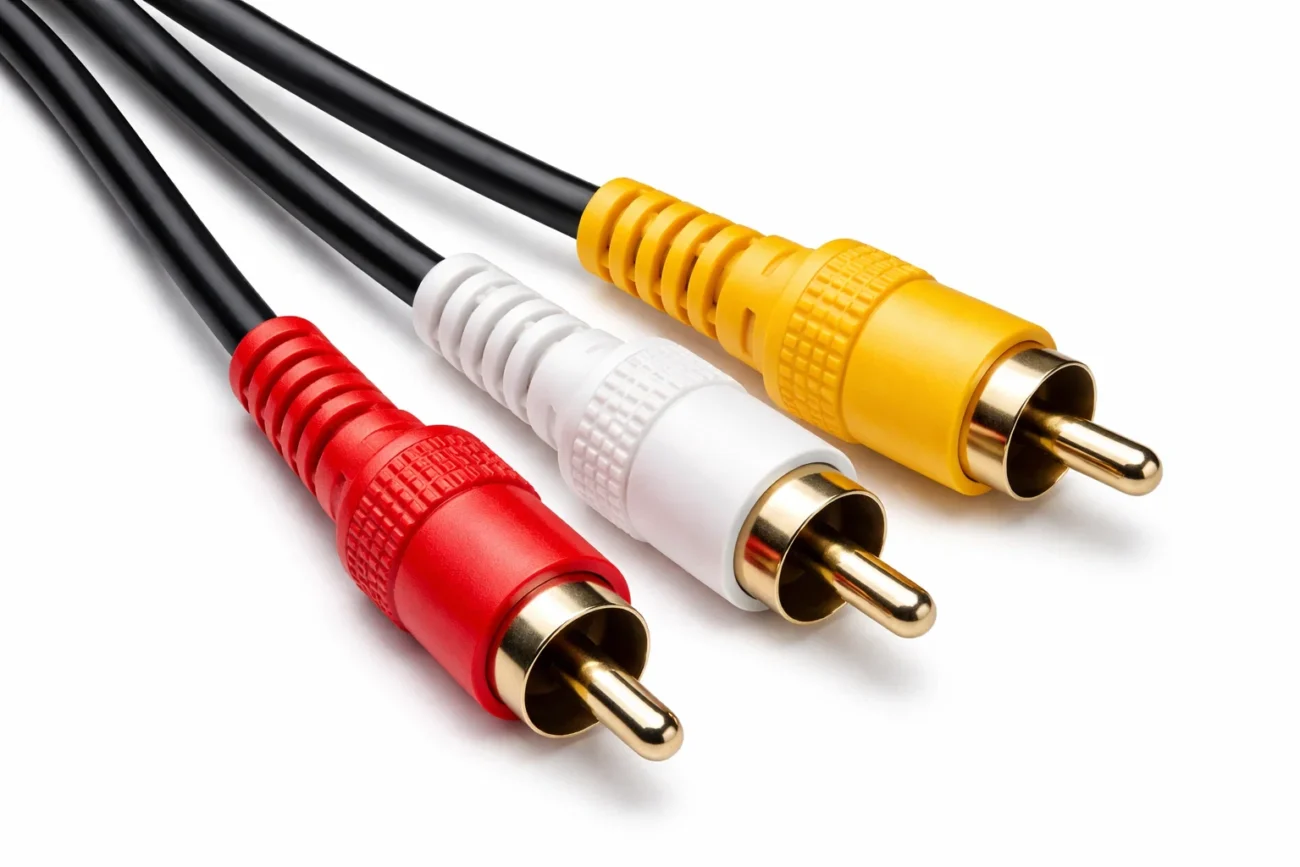
An RCA cable typically consists of a pair or trio of connectors, color-coded for easy identification—red for the right audio channel, white (or black) for the left audio channel, and yellow for composite video. Despite the rise of digital connections such as HDMI and optical cables, RCA cables remain relevant due to their simplicity, affordability, and widespread compatibility.
How RCA Cables Work
RCA cables work by transmitting analog signals between devices. Analog signals represent audio or video information in a continuous waveform, unlike digital signals that use binary data. Each RCA connector contains a central pin and an outer ring. The central pin carries the signal, while the outer ring serves as the ground or return path.
In a standard stereo RCA cable, the red and white connectors transmit the right and left audio channels, allowing for stereo sound. For video, the yellow connector transmits the composite video signal, combining brightness (luminance) and color (chrominance) information into a single signal.
While analog transmission may be more prone to signal degradation over long distances compared to digital alternatives, RCA cables can still deliver high-quality audio and video over short to moderate lengths, making them suitable for home entertainment setups and older devices.
Types of RCA Cables
RCA cables come in several variations, each designed for specific audio and video needs. Stereo RCA are the most common, carrying two channels of audio—left and right. These are often used to connect music systems, speakers, or amplifiers. Composite RCA includes an additional yellow connector for standard-definition video.
Component RCA cables provide a higher-quality video connection by splitting the video signal into three separate channels—typically red, green, and blue—allowing for sharper image resolution compared to composite cables.
There are also coaxial RCA cables, primarily used for digital audio transmission, which can carry Dolby Digital or DTS signals between devices. Each type of RCA cable serves a specific purpose, and understanding these differences is crucial for selecting the right cable for your setup.
Materials and Build Quality
The performance of RCA cables is heavily influenced by the materials used and the overall build quality. High-quality RCA cables often feature oxygen-free copper (OFC) conductors, which offer better signal transmission and reduced resistance. The connectors themselves may be gold-plated to prevent corrosion and ensure a stable connection over time.
Cable shielding is another essential factor—it helps prevent interference from electromagnetic and radio frequency sources, which can introduce noise into audio or video signals. Thick insulation not only protects the internal wires but also enhances durability, particularly in setups where cables are frequently moved or plugged in and out.
Advantages of RCA Cables
RCA cables have several advantages that keep them relevant even in the digital age. One major benefit is compatibility; virtually all analog devices manufactured in the last few decades support RCA connections. They are also easy to use, with a simple plug-and-play design and clear color coding, reducing the chances of incorrect connections.
RCA cables are affordable compared to digital alternatives, making them accessible for budget-conscious users. Analog RCA provides a warm, natural sound, which some audiophiles prefer over the sometimes sterile sound of digital connections. Their versatility is another advantage—they can be used for audio, video, and even some low-frequency digital signals, accommodating a wide range of home and professional setups.
Disadvantages of RCA Cables
Despite their advantages, RCA cables have limitations. One notable drawback is signal degradation over long distances. Analog signals transmitted via RCA can lose quality if the cable is too long or if it is poorly shielded. RCA is also limited in bandwidth, making it unsuitable for high-definition video or high-resolution multi-channel audio without using component or coaxial variants.
In environments with significant electromagnetic interference, RCA cables may pick up unwanted noise, which can affect both audio and video quality. Furthermore, as technology continues to advance, many modern devices favor digital connections like HDMI or optical cables, which transmit both audio and video through a single cable while maintaining higher fidelity.
How to Choose the Right RCA Cable
Selecting the right RCA cable depends on the devices you are connecting and the quality of signal you need. For standard audio connections, a basic stereo RCA cable may suffice, while for higher-quality video, a component RCA cable is preferable. Look for cables with good shielding and high-quality conductors, particularly if the cable will run long distances or in environments with potential interference.
Gold-plated connectors are recommended for reducing corrosion and maintaining a stable connection. Cable length is another consideration; avoid excessively long cables to prevent signal loss. Finally, check compatibility with your devices, as some modern equipment may require adapters or digital alternatives. Choosing the right RCA cable ensures optimal performance, durability, and ease of use.
Common Uses of RCA Cables
RCA cables have a wide range of applications in both home and professional settings. In home entertainment, they are commonly used to connect stereos, amplifiers, DVD players, and older gaming consoles. RCA is also used for connecting turntables and audio mixers in music production environments.
In video applications, composite RCA cables can connect VCRs, camcorders, and older televisions, while component cables support higher-definition setups like DVD or Blu-ray players. RCA is often employed in automotive audio systems, linking head units to amplifiers and speakers. Their simplicity and reliability make them a preferred choice for many situations where digital connections are either unavailable or unnecessary.
RCA Cables vs. Other Cables
When comparing RCA cables to other connection types, several distinctions emerge. HDMI cables, for example, transmit both audio and video digitally through a single cable, supporting high-definition resolutions and multi-channel sound, which RCA cannot match. Optical cables carry digital audio signals and are immune to electromagnetic interference, offering superior sound quality for multi-channel setups.
However, RCA cables retain an edge in compatibility with older devices and for users who prefer analog audio. Unlike USB or HDMI, RCAcables are widely recognized, color-coded, and easy to troubleshoot, making them a practical solution for non-technical users or vintage equipment.
Maintaining RCA Cables
Proper maintenance of RCA cables ensures longevity and consistent performance. Keep connectors clean and free from dust or oxidation, which can be achieved with occasional use of a contact cleaner or soft cloth. Avoid bending cables sharply or pulling them forcefully, as this can damage the internal wires. If cables are frequently plugged in and out, consider using cables with reinforced connectors or strain relief to prevent wear.
For long-term storage, coil cables loosely and avoid kinks. In professional or high-usage environments, labeling cables helps prevent confusion and ensures that devices are connected correctly every time. Simple care practices can significantly extend the lifespan of RCA cables.
Common Issues with RCA Cables
Despite their reliability, RCA cables can experience issues over time. One common problem is loose connections, which can result in intermittent audio or video signals. Corrosion on connectors may also degrade signal quality, particularly if the cables are exposed to moisture. Cable damage from bending, twisting, or crushing can interrupt signal transmission.
Interference from nearby electronics can introduce hum, static, or ghosting in video signals. Understanding these potential issues helps users troubleshoot problems quickly, often by checking connections, replacing damaged cables, or upgrading to better-shielded models. Awareness and proactive maintenance minimize disruptions in audio and video performance.
RCA Cables in the Modern World
Even with the rise of digital interfaces like HDMI, USB-C, and wireless streaming, RCA cables continue to hold relevance. Many older devices still rely on analog connections, and enthusiasts of vintage audio equipment or classic gaming consoles often prefer RCA connections for authenticity and simplicity.
RCA cables are inexpensive, widely available, and simple to use, making them a practical choice for temporary setups, testing equipment, or DIY audio-video projects. In professional audio and video production, RCA connectors are sometimes used for patching signals or connecting legacy devices, highlighting their enduring utility in both consumer and professional contexts.
Tips for Buying RCA Cables
When purchasing RCA cables, consider both performance and practicality. First, determine the required cable length, as longer cables may introduce signal loss if not well-shielded. Prioritize quality materials, such as oxygen-free copper conductors and gold-plated connectors, for better conductivity and corrosion resistance. Check for adequate shielding to prevent interference from other electronic devices.
If connecting multiple devices, consider color-coded or labeled cables to reduce setup errors. While expensive cables may offer marginal improvements in shielding and durability, mid-range RCA cables typically provide sufficient performance for most home entertainment systems. Reading reviews and comparing brands can also help ensure you select a cable that balances quality, durability, and cost.
DIY and Custom RCA Cables
For hobbyists or professionals, building custom RCA cables can be both a practical and satisfying project. DIY cables allow customization of length, connector type, and shielding, tailoring the cable to specific needs. Start with high-quality conductors and connectors, and ensure proper soldering techniques to avoid poor signal transmission.
Heat-shrink tubing or braided sleeves can protect the cable and improve durability. Custom RCA cables are particularly useful in audio studios, home theaters, or car audio installations, where off-the-shelf options may not meet specific length or performance requirements. A well-made DIY RCA cable can match or exceed the performance of commercial alternatives while offering a personal touch.
Conclusion
RCA cables remain a fundamental component in the world of audio and video connections. Their longevity, ease of use, and compatibility with a wide range of devices make them indispensable, especially for analog setups, vintage equipment, and budget-conscious consumers.
Despite the prevalence of digital technologies, the reliability and simplicity of RCA cables ensure they continue to have a place in both homes and professional environments. By understanding their types, uses, advantages, and limitations, users can select the right RCA to achieve optimal audio and video performance.
Whether for connecting classic turntables, gaming consoles, or home theater systems, RCA continues to deliver a dependable and familiar solution for decades of entertainment enjoyment.
You May Also Read: Kansas City Royals vs White Sox match player stats
