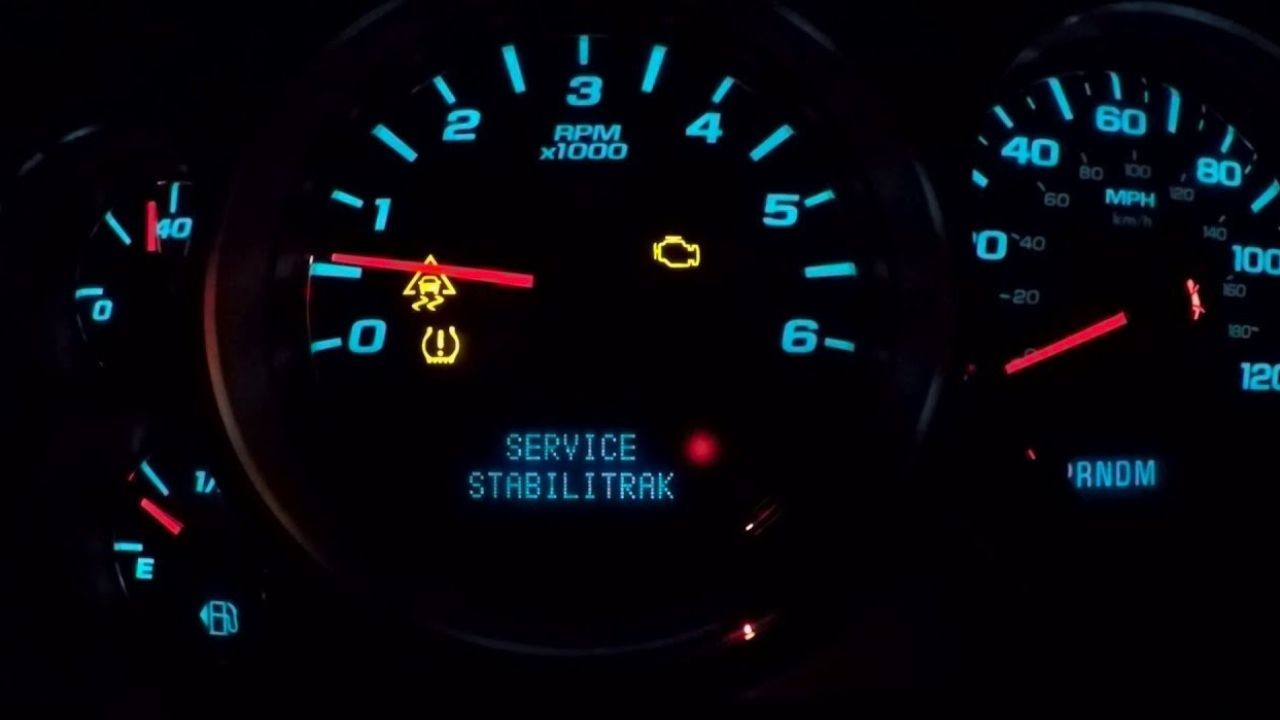
Stabilitrak is a sophisticated electronic stability control system developed by General Motors (GM) to enhance vehicle safety and prevent accidents caused by loss of control. Introduced in the early 2000s, Stabilitrak is now a standard feature across many GM vehicles, including Chevrolet, GMC, Buick, and Cadillac models. The system is designed to monitor the vehicle’s movement in real time, detecting conditions that could lead to skidding, oversteering, or understeering.
How Stabilitrak Works
The mechanics of Stabilitrak involve a network of sensors and control modules that constantly communicate with the vehicle’s onboard computer. The system relies on four main types of sensors: wheel speed sensors, steering angle sensors, yaw rate sensors, and lateral acceleration sensors. Wheel speed sensors track how fast each wheel is turning, detecting if a wheel is slipping. Steering angle sensors measure the direction the driver intends to go, comparing it with the actual direction of travel.
Yaw rate sensors monitor the rotation of the vehicle around its vertical axis, while lateral acceleration sensors measure side-to-side forces on the vehicle. By analyzing data from all these sensors, Stabilitrak can determine whether the vehicle is moving as the driver intends. If the system detects a discrepancy, it intervenes by selectively applying brakes to specific wheels and modulating engine power.
The Benefits of Stabilitrak
The introduction of Stabilitrak has brought significant safety benefits to drivers and passengers. One of the primary advantages is its ability to prevent accidents in slippery or challenging road conditions. By detecting loss of control early, Stabilitrak can intervene before a minor skid turns into a serious accident. This is especially important during sudden maneuvers, such as swerving to avoid obstacles or other vehicles.
Stabilitrak reduces the risk of rollovers, particularly in SUVs and trucks, which are more prone to tipping over due to their higher center of gravity. Beyond accident prevention, Stabilitrak also enhances driver confidence, allowing drivers to navigate curves, wet roads, and unexpected hazards with greater assurance. The system works seamlessly in the background, requiring no input from the driver beyond normal driving behavior.
Stabilitrak vs. Traditional Traction Control
While Stabilitrak shares similarities with traditional traction control systems, it offers more comprehensive protection. Traction control primarily focuses on preventing wheel spin during acceleration, especially on slippery surfaces. Stabilitrak, on the other hand, provides full vehicle stability control, addressing oversteer, understeer, and potential rollovers in addition to wheel slip.
The system can apply braking independently to each wheel and adjust engine output, offering a more dynamic response to complex driving situations. In essence, traction control is a subset of what Stabilitrak does. Vehicles equipped with Stabilitrak not only have enhanced traction during acceleration but also better control during turning, emergency maneuvers, and challenging weather conditions.
Common Issues with Stabilitrak
Like any advanced electronic system, Stabilitrak is not entirely immune to issues. Common problems include warning lights appearing on the dashboard, system malfunctions due to faulty sensors, or unintended braking intervention. For instance, wheel speed sensors can fail due to dirt, corrosion, or mechanical damage, causing Stabilitrak to misinterpret the vehicle’s movement. Steering angle sensors may also drift over time, leading to false activation of the system.
In rare cases, software glitches within the vehicle’s control module can trigger warning lights or reduce the system’s effectiveness. When drivers notice the Stabilitrak warning light on their dashboard, it is essential to have the system inspected by a certified technician. Regular maintenance, including cleaning sensors and ensuring proper calibration, helps keep Stabilitrak functioning correctly.
Stabilitrak in Different GM Vehicles
Stabilitrak is available across a wide range of GM vehicles, from compact sedans to full-size SUVs and trucks. For example, Chevrolet models like the Tahoe and Silverado, GMC vehicles like the Sierra and Yukon, and Cadillac’s Escalade all come equipped with this system. The implementation may vary slightly depending on the model and year, with newer vehicles featuring more refined algorithms and faster response times.
In trucks and SUVs, Stabilitrak is particularly valuable due to the higher risk of rollover in emergency maneuvers. GM has continually refined Stabilitrak over the years, integrating it with other safety technologies like ABS (anti-lock braking system) and advanced driver-assistance systems (ADAS) to provide a comprehensive safety net for drivers.
The Role of Stabilitrak in Accident Prevention
Statistical data has shown that electronic stability control systems like Stabilitrak significantly reduce the likelihood of accidents. According to studies conducted by the National Highway Traffic Safety Administration (NHTSA), vehicles equipped with stability control systems are less likely to be involved in single-vehicle crashes, especially rollovers. Stabilitrak achieves this by maintaining vehicle stability during critical moments when driver reaction alone may not be sufficient.
The system’s ability to apply targeted braking and adjust engine output in real time ensures that even unexpected hazards, such as sudden turns or slippery patches, do not result in loss of control. For families, daily commuters, and long-distance travelers, this technology provides an added layer of protection that traditional safety measures alone cannot offer.
Technical Components of Stabilitrak
Stabilitrak is more than just a set of sensors; it is a fully integrated system that works seamlessly with other vehicle safety technologies. At its core, the system relies on the Vehicle Stability Control (VSC) module, which acts as the brain of Stabilitrak. This module continuously processes data from wheel speed sensors, steering angle sensors, yaw sensors, and lateral acceleration sensors to determine the vehicle’s current state.
The module communicates with the Anti-lock Braking System (ABS) to modulate braking at each wheel individually. This selective braking ensures that the car can counteract skids and maintain the intended path. Advanced versions of Stabilitrak also incorporate inputs from traction control systems, hill-start assist, and electronic brake-force distribution, creating a fully cohesive safety net for the driver.
Stabilitrak and Adverse Weather Conditions
One of the key benefits of Stabilitrak is its performance in adverse weather conditions. Rain, snow, and ice significantly increase the risk of skidding and loss of control. Traditional traction control helps prevent wheel spin during acceleration, but it cannot manage vehicle stability during sharp turns or sudden lane changes. Stabilitrak addresses this gap by actively correcting oversteer and understeer, regardless of the road surface.
For example, on icy roads, a sudden turn can cause the rear of the vehicle to slide outward, a dangerous situation known as oversteer. Stabilitrak can detect this motion and apply braking to the outer front wheel, redirecting the vehicle’s momentum and helping it follow the driver’s intended path.
Stabilitrak in SUVs and Trucks
The importance of Stabilitrak is particularly pronounced in SUVs and trucks. These vehicles have a higher center of gravity, making them more susceptible to rollovers during sharp maneuvers or sudden swerves. Stabilitrak’s ability to manage vehicle stability is crucial in preventing such dangerous scenarios. In GM SUVs like the Chevrolet Tahoe and GMC Yukon, Stabilitrak works alongside features like Trailer Sway Control to maintain stability even when towing heavy loads.
For pickup trucks like the Chevrolet Silverado, the system ensures that even when the bed is loaded unevenly, the vehicle remains controllable in emergencies. By continuously monitoring the dynamics of the vehicle, Stabilitrak reduces the likelihood of rollover accidents, which are often more severe due to the higher impact points.
Driving Tips with Stabilitrak
While Stabilitrak greatly enhances vehicle safety, it is not a substitute for careful driving. Drivers should remain attentive and avoid overreliance on electronic aids. Proper tire maintenance, safe driving speeds, and cautious handling on wet or icy roads are still essential. When driving in conditions that might trigger Stabilitrak intervention, it is helpful to understand how the system works.
For instance, if the vehicle begins to skid and Stabilitrak engages, drivers may feel slight braking or reduced engine power. This is normal and indicates the system is actively helping to stabilize the vehicle. Familiarizing oneself with these responses can improve driver confidence and ensure the technology is used to its full potential.
Future of Stabilitrak and Vehicle Safety
As automotive technology evolves, Stabilitrak is expected to become even more advanced. Integration with autonomous driving systems, more precise sensor arrays, and improved predictive algorithms will allow vehicles to anticipate loss of control before it occurs. Future iterations may communicate with road infrastructure and other vehicles to optimize stability proactively.
The combination of Stabilitrak with AI-driven safety systems could redefine vehicle safety standards, reducing accidents even further and paving the way for semi-autonomous or fully autonomous vehicles. GM’s ongoing commitment to vehicle safety ensures that Stabilitrak remains at the forefront of stability technology, continually adapting to new challenges on the road.
Conclusion
Stabilitrak represents a critical advancement in automotive safety, offering drivers a system that actively prevents loss of control and reduces the risk of accidents. By using a sophisticated network of sensors and control modules, the system can detect oversteer, understeer, and wheel slip, intervening in real time to maintain stability. While it may have occasional sensor or software-related issues, the overall benefits of Stabilitrak far outweigh the drawbacks.
Available across a wide range of GM vehicles, from sedans to trucks and SUVs, the system enhances driver confidence and safety in various driving conditions. As automotive technology continues to advance, Stabilitrak is poised to integrate with more sophisticated safety and autonomous driving systems, ensuring that vehicle stability remains a top priority for years to come.
You May Also Read: whatsmyname app
