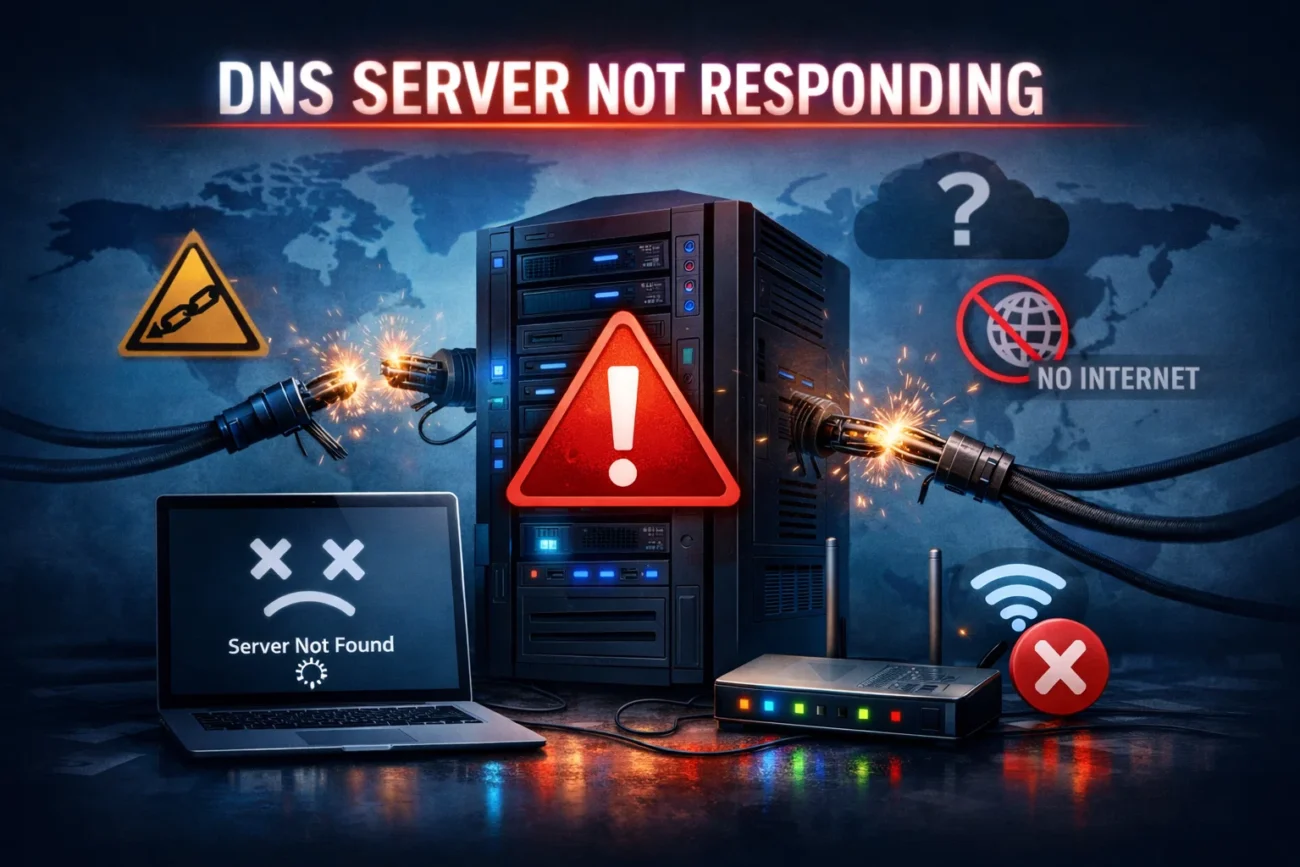
Understanding DNS Server Not Responding
A “DNS server not responding” error is one of the most common connectivity issues that computer users face today. DNS, which stands for Domain Name System, acts as a translator between human-readable domain names and the numerical IP addresses that computers use to identify each other on the network.
When the DNS server fails to respond, your system cannot resolve website addresses, making it impossible to access online content. This error can occur on any operating system, including Windows, macOS, Linux, and even mobile platforms, and can affect any browser or network-connected application.
What Causes a DNS Server Not Responding Error
Several factors can trigger the DNS server not responding error. One primary cause is a misconfigured network setting on your device, such as incorrect DNS addresses or a disrupted IP configuration. Problems on the DNS server side itself, such as server downtime or technical failures, can also lead to this issue.
Malware or virus infections can interfere with DNS settings, redirecting requests to malicious servers. Other common causes include network adapter issues, firewall restrictions, outdated network drivers, or temporary ISP outages. Identifying the exact cause is crucial because each situation may require a different solution.
How DNS Works and Why It Matters
To understand why a DNS server not responding error occurs, it is essential to know how DNS works. When you enter a website address into your browser, your computer sends a query to a DNS server to find the corresponding IP address. If the DNS server is functioning correctly, it returns the IP address, and your browser loads the website.
However, if the server is down, unreachable, or incorrectly configured, your device cannot complete the query, resulting in a DNS error. Proper DNS function is critical for a smooth internet experience, and even minor disruptions can prevent access to multiple online services.
Checking Your Internet Connection
Before attempting complex fixes, it’s important to check your internet connection. Sometimes, what appears to be a DNS server problem is simply a connectivity issue. Ensure your Wi-Fi or Ethernet connection is stable. Restart your router or modem to refresh the connection. You can also try connecting to a different network to determine if the problem lies with your ISP or local network configuration. Ensuring basic connectivity is the first step in troubleshooting a DNS server not responding issue.
Restarting Your Device and Router
A simple restart can resolve many temporary DNS issues. Restarting your computer refreshes network settings, clears the cache, and terminates processes that may interfere with DNS queries. Similarly, rebooting your router or modem can resolve conflicts with the ISP and re-establish a stable connection. This step is often overlooked but can be effective in resolving intermittent DNS failures. If the problem persists after restarting, more advanced troubleshooting may be necessary.
Changing DNS Server Settings
One effective method to resolve a DNS server not responding error is to change your DNS server manually. By default, your device uses the DNS server provided by your ISP, but these servers can sometimes be slow or unreliable. You can switch to public DNS services like Google DNS (8.8.8.8 and 8.8.4.4) or Cloudflare DNS (1.1.1.1 and 1.0.0.1). To change DNS settings, access your network adapter settings, locate the IPv4 properties, and input the new DNS addresses. This can often improve speed and reliability while eliminating server-specific errors.
Flushing the DNS Cache
Your computer maintains a local DNS cache to speed up domain name resolution. Over time, this cache may become outdated or corrupted, causing DNS server errors. Flushing the DNS cache can resolve these issues. On Windows, this can be done using the Command Prompt with the command ipconfig /flushdns. On macOS, the terminal command sudo killall -HUP mDNSResponder accomplishes the same task. Flushing the DNS clears old entries and forces your device to query the DNS server for fresh data, often resolving the “DNS server not responding” problem.
Resetting Network Settings
Network misconfigurations are a common cause of DNS errors. Resetting your network settings can restore default configurations and eliminate potential conflicts. On Windows, the commands netsh winsock reset and netsh int ip reset can reset network adapters. On macOS and Linux, network preferences can be restored using system-specific commands or GUI tools. After resetting, restart your device to apply the changes. This approach is particularly useful when multiple attempts to fix the DNS server error have failed.
Disabling Firewall and Antivirus Temporarily
Firewalls and antivirus programs are designed to protect your system, but they can sometimes block DNS queries accidentally. To test if this is the cause, temporarily disable your firewall or antivirus and check if the issue persists. If the DNS error disappears, review your firewall or antivirus settings to ensure DNS traffic is allowed. Make sure to re-enable protection afterward. This step requires caution because leaving your system unprotected can pose security risks.
Updating Network Adapter Drivers
Outdated or corrupt network drivers can prevent your system from communicating with the DNS Server Not Responding properly. Updating network drivers ensures compatibility with modern networking protocols and improves reliability. On Windows, you can update drivers through Device Manager or download the latest version from the manufacturer’s website. On macOS and Linux, system updates usually include driver updates. Regularly updating drivers is an effective preventive measure against DNS-related problems.
Using Command Line Tools for Troubleshooting
Command-line tools are invaluable for diagnosing DNS server issues. Commands like ping, nslookup, and tracert help determine whether the DNS server is reachable and how the request is routed. For example, nslookup www.example.com can verify if the DNS server resolves the domain correctly. Using these tools, users can identify whether the issue is with the DNS server, the local device, or the ISP. Advanced users can leverage this information to implement targeted fixes rather than generic solutions.
Switching Between IPv4 and IPv6
Some DNS server errors are related to compatibility between IPv4 and IPv6 protocols. If your network or DNS server does not fully support IPv6, queries may fail, resulting in the “DNS server not responding” error. Disabling IPv6 temporarily or ensuring that both protocols are properly configured can resolve the problem. Network adapters allow users to toggle between IPv4 and IPv6 settings, providing flexibility in troubleshooting and compatibility with various networks.
Checking Router DNS Settings
Routers themselves often have DNS Server Not Responding settings that can override device-level configurations. If your router is misconfigured or pointing to an unreliable DNS server, all connected devices may experience the error. Access your router’s admin panel, locate DNS settings, and verify the configured servers.
Switching to a reliable public DNS Server Not Responding or resetting the router to default settings can resolve widespread DNS issues across your network. It’s a step that addresses problems at the network’s core rather than just individual devices.
Advanced Troubleshooting Techniques
For persistent issues that standard fixes cannot resolve, advanced techniques may be necessary:
-
Using a VPN:
If your ISP’s DNS server is not responding, using a reliable VPN can bypass it entirely. VPNs use their own DNS servers and encrypt traffic, often restoring access to blocked or unresponsive sites. -
Testing Alternative Browsers:
Sometimes, the issue is browser-specific. Try accessing websites from another browser to determine if the problem lies within the browser or the network. -
Analyzing with Ping and Traceroute:
Usepingto test connectivity to the DNS server ortracert(Windows) /traceroute(macOS/Linux) to analyze where requests fail. This identifies whether the problem occurs within your local network, the ISP, or beyond. -
Reinstall Network Drivers (Windows) or Update Network Firmware (Mac):
A corrupt driver can block DNS queries. Uninstall and reinstall your network driver on Windows. For Mac, ensure your system firmware and updates are current. -
Checking Router Firmware:
Outdated router firmware can cause compatibility issues with DNS servers. Access your router’s admin panel and check for firmware updates. Applying updates can restore normal DNS functionality.
Identifying ISP-Related Issues
Sometimes the problem lies not with your device but with your Internet Service Provider. ISP outages, server maintenance, or misconfigured DNS services can prevent domain resolution. Contacting your ISP to confirm server status or temporarily switching to an alternative DNS provider can resolve the issue.
Understanding whether the problem is internal or external is crucial for determining the correct course of action. It can save time and prevent unnecessary changes to device settings.
Preventing Future DNS Server Problems
Preventing DNS errors involves a combination of good practices. Regularly updating your operating system and network drivers reduces compatibility issues. Using reliable DNS servers, maintaining a clean DNS cache, and securing your network from malware are essential steps.
Configuring network settings carefully and monitoring ISP announcements can prevent unexpected DNS Server Not Responding interruptions. A proactive approach ensures smooth internet access and reduces the frequency of the “DNS server not responding” error.
Conclusion
The “DNS server not responding” error can be frustrating, but understanding its causes and applying systematic troubleshooting methods can resolve it efficiently. From checking your internet connection and restarting devices to changing DNS servers, flushing caches, updating drivers, and verifying router settings, each step addresses a potential source of the problem.
While some issues originate on the local device, others may involve your ISP or even a global DNS Server Not Responding. By following the outlined solutions and maintaining preventive practices, users can ensure reliable access to websites and online services, minimizing downtime and enhancing overall network performance.
You May Also Read: Hydroxyapatite toothpaste
